Monthly Archives: April 2012
Bunso Bunso

This is a local form of jigging for mackerel and other small fish. It involves dropping a long main line with many snoods (or short branch leaders) almost to the bottom. The main line is then jigged up and down by hand to attract fish throughout the water column. The hooks are similar to small sabiki like hooks that are dressed with small feathers, tinsel or other similar fabrics or plastics. This is typically done around Payaw (buoys) in deeper water to catch small schooling pelagics. Unlike in the west these small mackerel and other small species that are caught by this method are eaten and not used as bait. These rigs can be quite productive when big schools are present. Guys who use this technique are quick to tell though of how they have often been snagged by many of the small hooks when a large predator takes one of the smaller fish that is struggling on the line. The way to avoid this is to firmly hold the main line so that the snood will snap off instead of drag the main line and other small hooks through your hand. The snoods are usually very light poundage (4-8lbs) with the smallest of the locally available hooks.
This technique is an excellent way to catch baitfish when fishing Payaws for Dorado, Tanigue, Tuna and other large predator fish. They are quite easy to make although they are a bit time consuming.
Send us your pictures or other info you have about this fishing method and we’ll add it to the site.
<><
Ladyfish ( Elops sp. )

Common Name: Ladyfish
Local Name: Bidbid
Max Size: 100 cm (3.7 kgs)
Biodiversity: Marine, Brackish, Endemic
Depth: Surface – ?? meters
Fishing Season: All Year Long
Minimum Size Limit: None
Recommended Bait/Lures: Cut Bait (Shrimp and fish), lures
IUCN Red List Status: (LC) Least Concern
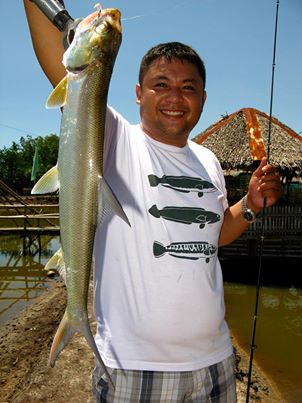
This is another species found in the Philippines specifically along the coastline where estuaries and mangrove swamps are. These aggressive predators are often mistaken for Milkfish (Bangus) because of their almost identical body shape and color. The fry of these fish look almost identical to Milkfish fry and so they are often mistakenly stocked in Milkfish ponds where they become a damaging pest.
Ladyfish can be taken on a variety of baits and lures. They are quite aggressive and often leap from the water when hooked to try to escape. They have large soft mouths which can make landing them quite frustrating. They often will strike and and run and manage to unhook themselves before you can land them.

Ladyfish on a soft plastic
I have not listed a specific species for the Ladyfish here because there are apparently seven different species of this fish which share many similarities. I prefer to just call these Philippine Ladyfish.
If you have caught Ladyfish here in the Philippines or if you have any other helpful information regarding this fish then please contact us.

17″ Ladyfish
____________________________________________________________
Philippine Record:
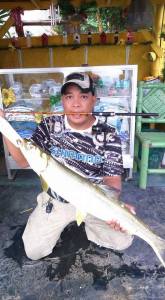
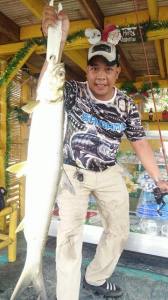

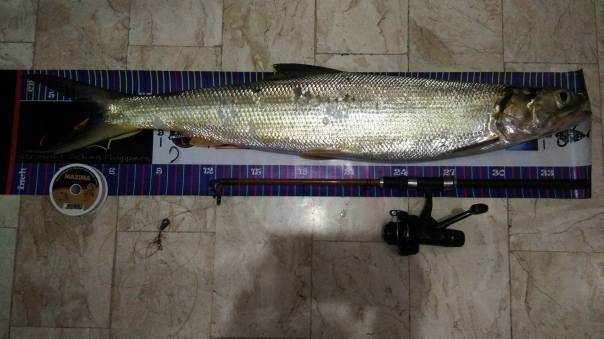
Angler: Ron Cortez
Location: D’Cove Pavilion and Fishpond; Tagalag, Valenzuela
Date: December 17, 2016
Weight: 3.7 kilograms
Length: 36 inches
Bait: cut shrimp
Setup: Ultra Light (6lbs)
<><
Squid from the shore
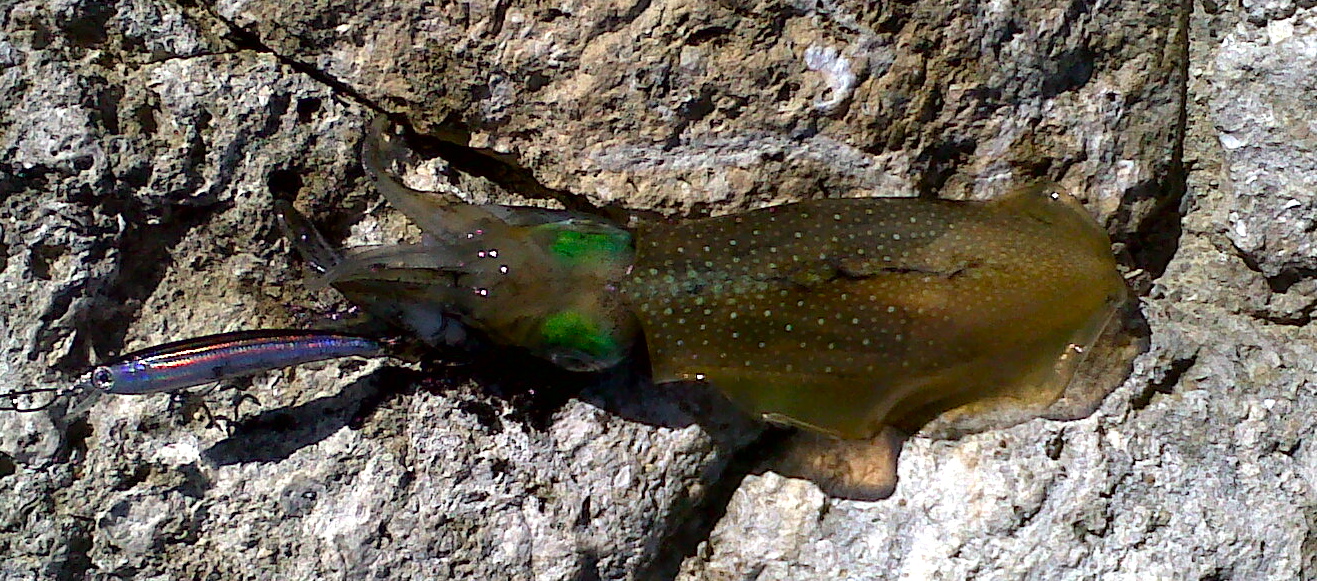
Nokus on Minnow Lure
I was able to get in a couple casts while on vacation with family at a resort in Cebu. This Green Eyed Squid aggressively chased and snatched my little Yo Zuri Pins minnow. To my surprise I was able to hook it and bring in my first Squid on a lure 🙂 I found that to get successful hook-up with a Squid you need to wait a second or two after the cuttlefish strikes before reeling in. That second wait allows the cuttlefish time to pull the lure in close to its beak which gives you a better chance for a positive hook-up if you are using simple treble hooks.
Squid in Tagalog is Pusit and in Bisaya it is known as Nokus.


 Fishing The Philippines