Monthly Archives: August 2012
25lb Flathead Catfish
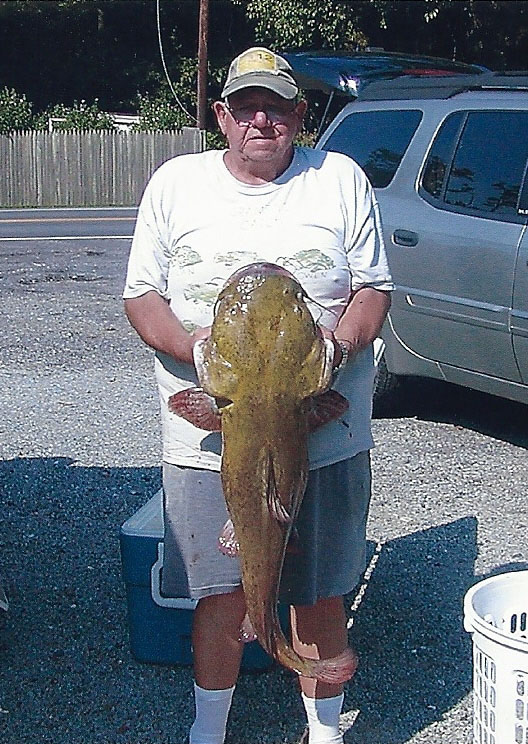 This Flathead was not caught in the Philippines, but I thought it was worth mentioning. It was caught by Bill Engle last week and it weighed in at around 25lbs. He caught this beauty on a live 6” channel catfish while bottom fishing in the Susquehanna River in Pennsylvania. Too bad we don’t have this variety of catfish in the Philippines. Two day previous my brother, grandfather and I went out with Bill and caught a couple smaller fish (the largest being around 3 lbs). Too bad we were with him when he caught this monster! Bill received a citation from the state of PA when he went to get an official weigh-in for catching one of the largest Flatheads from the Susquehanna. He will receive a special patch to put on his hat the says “25lb’ers Club” 🙂 I hope we can do something similar in Cebu and have official fish weighing stations were sport anglers can weigh big fish. Maybe a goal for me to shoot for:-) Good going Bill!
Sanipit Fishing Method
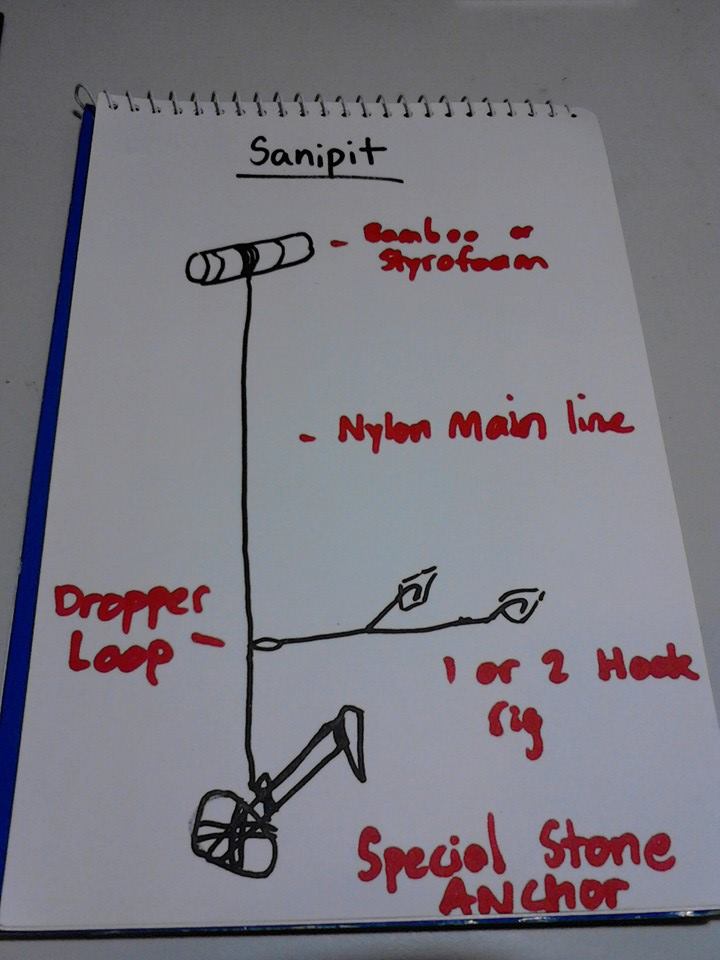
A Rough Sketch Of The Sanipit
This is a local fishing method typically used for fishing very deep water that would either be too tiring or too time consuming to fish with a handline. The technique involves fastening a buoy of some sort (traditionally a couple sections of bamboo) to a long main line. Local nylon is used for the main line which is then tied to an stick that has a branch off at the top. Guava wood is a favorite for this because of it is strong, dense and durable. The guava branch is tied to a rock to create an anchor weight. The mainline which is tied to the top of the guava branch is also tied with light nylon to the base of the anchor. If the anchor is snagged on the bottom the light nylon can be broken by pulling on the main line. This allows the anchor to pivot at a different angle and hopefully pull free from the snag. Near the anchor a dropper loop is tied to which a leader line is tied. Either one or two hooks are tied onto the leader and baited with cut bait such as mackerel or other fish. This rig is then dropped into deep water where fish are suspected. The Sanipit is left usually overnight and retrieved in the morning. This type of fishing allows the local fishermen to fish water from 100 – 300 meters in depth. Many species of deepwater fish can be caught. Some of these include; deep water Snapper, large Grouper, Emperors, Jobfish, Oilfish, Snoek, Amberjacks, etc.
Fishermen normally place multiple Sanipit rigs at one time around a general area. This helps them to triangulate spots that hold fish. There are some difficulties with this fishing method. Rigs can get hopelessly snagged which causes loss of line and some times tackle. Large fish can also drag the buoy away or cut the mainline. Theft by other fishermen is also another problem which is why many place the Sanipit at dusk and collect at dawn.
Here is a picture of the Sanipit anchor/weight:

Common Weights Used For Deep Sea Fishing Around The Islands
I will try to get some pictures of the actual rig and fish caught using this rig. If you have any additional information or photos to add or if you have any questions please leave a comment or send us a message.
<><
Ouano Warf Area
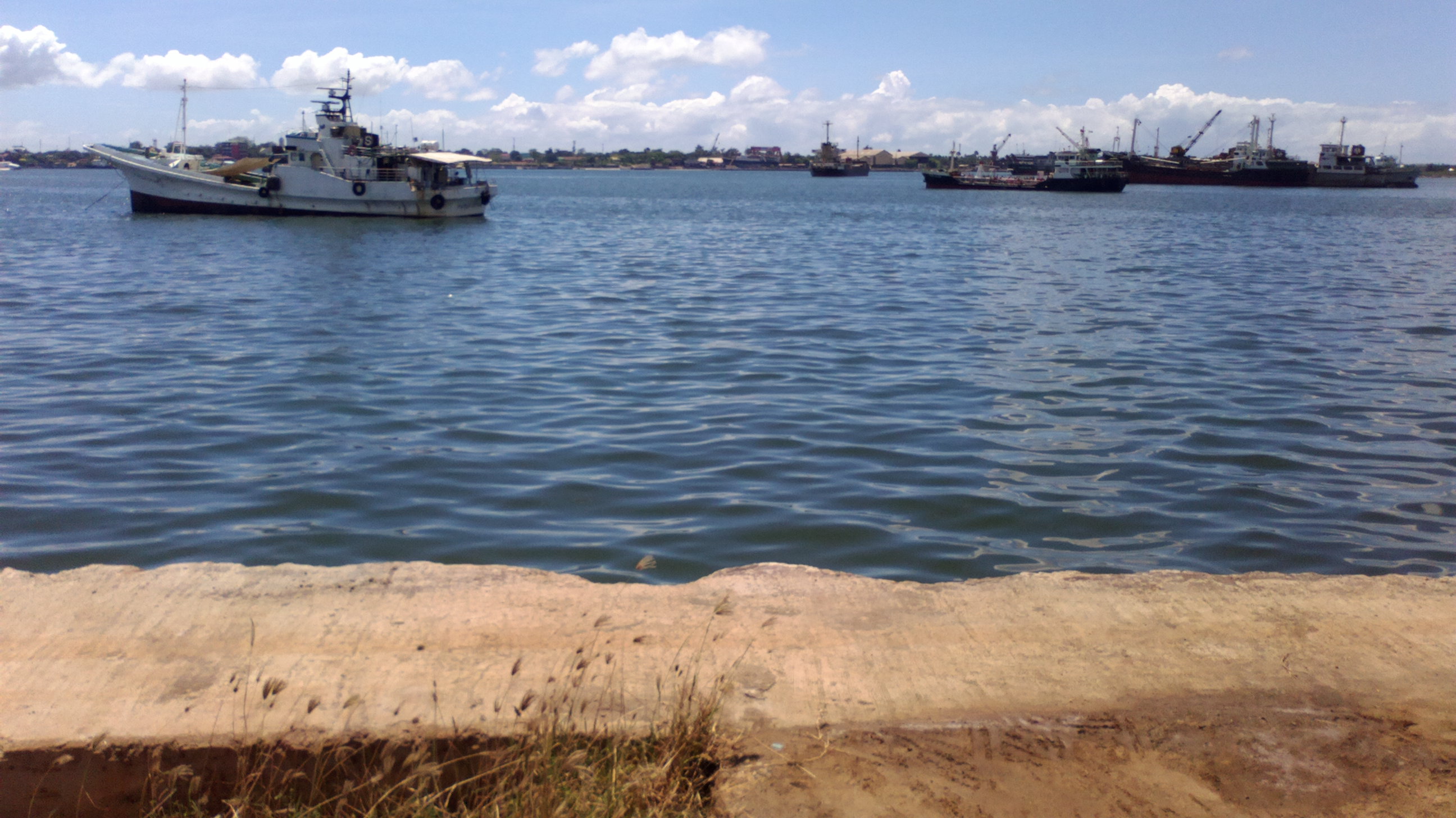
This is an open spot in Mandaue along the Mactan Channel.
PROS:
Spacious area that is open to fishing
Parking for cars
Somewhat secluded and not crowded with people
Good potential for fish
CONS:
The area often smells like sewage due to a nearby canal
No lighting at night and far from the main road, so potentially not safe at night
Occasionally trucks pass by on the dirt road and kick up dust
Some garbage in the water
No stores nearby to buy food or drinks
Not easily accessible without a car.
DESCRIPTION:
This is a stretch of the port area that is open for fishing. Like much of the Cebu port area it has its problems. Things that make fishing here less than exceptional are the smell (sewage) and the garbage that is often seen floating in the water. Besides those two things this area is not bad. There is a lot of space to fish and so there is no problem of having too many people around. If any the problem would be having too few people around.
This area is a pier area that sits on reclaimed land, so the water is deeper that the typical Cebu shoreline. Best to try live shrimp or minnows here or cut bait. I have not been able to fish this spot yet, but have heard that it is productive.
FISH SPECIES:
Expect the usual predators like; trevally, grouper, barracuda, eels, emperors, pacific tarpon, and more.
RATING:
( 5/10 ) This is far from a great spot, however it is a quiet place that would make a great morning spot.
REMINDERS:
Bring sun protection; the sun is unforgiving and there is no shade here
Avoid this spot after dark; it is secluded and not well lit. (unless there is a group of you)
Bring drinks and snacks
One of you has to leave an ID with the guard at the gate by the road
Send us pics of what you catch here!
PHOTOS:

Facing south towards Cebu City
Facing Mactan

Facing north toward the market and the canal
Green Lagoon Park, Compostela, Cebu
Here is a spot that is located outside the city of Cebu just to the North in Compostela. This is a park style resort located along the coast in Compostela. Here is a map of the spot:
PROS:
Multiple spots within the resort to fish (jetties, beaches, etc.)
Parking for vehicles
You can bring food (grills/tables/chairs available there) and drinks for picnics
Family friendly atmosphere
Clean water
Separate areas to swim
CONS:
There can be lots of people from time to time
Entrance fee
DESCRIPTION:
This is a laid back family and large group oriented resort located along the Compostela coastline. It has three stone and concrete jetties protecting its two rock and sand beaches. You can fish on all three jetties. The sea floor gradually slopes deeper away from the beach, however the reef wall is looked well beyond casting distance. The bottom is rocky and sandy. You can bring food and drinks into this resort, so it makes a great spot to take the family for the day.
FISH SPECIES:
Barracuda, Grunters, Emperors, and more. The ones I listed here were what I caught when fishing and what I saw when I did a little snorkelling. There are also some mangroves and a small stream leading to the ocean on the northern side of the resort.
RATING:
( 8/10 ) This is not a bad place to fish. It is a little bit of a drive from the City through and did not seem to have lots of fish so I give it an 8.
REMINDERS:
Fish Responsibly – Catch and Release and clean up after yourself
Bring sun protection because there is little shade in the spots where you fish
Be aware of the swimmer/snorkelers
Bring lures and bait
I Visited this place with some friends, family and co-workers and was able to bring along some fishing gear. Hooked this nice little barracuda after about five minutes of fishing. Try to catch the high tide as it goes out to catch barracuda like this and other species.
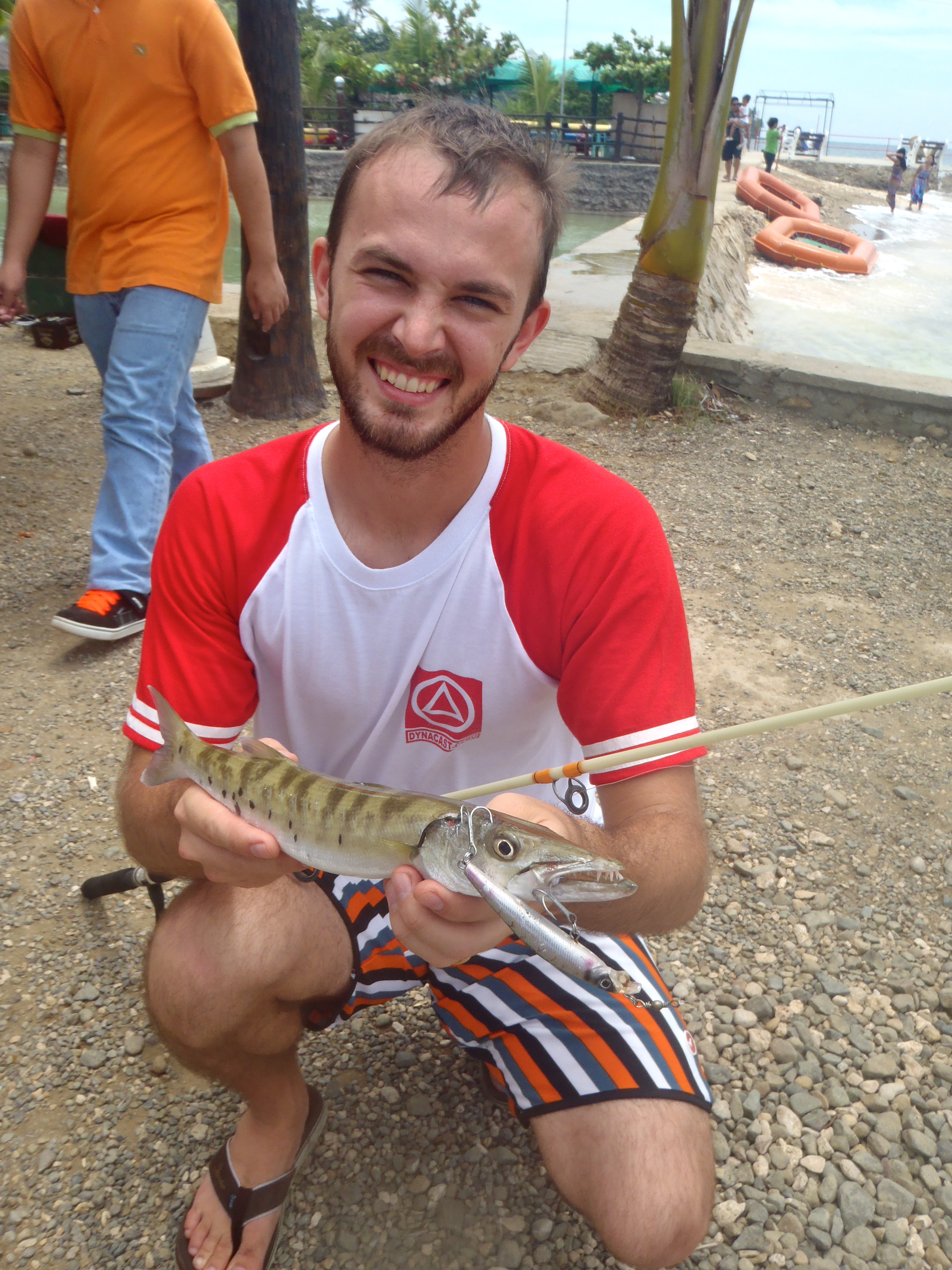
Nice little cuda on a Pins Minnow
Mangrove Snapper ( Lutjanus griseus )

Common Name: Mango Snapper, Grey Snapper, Pargo
Local Name: Maya Maya (Tagalog), Aha-an, Pantaan, Mangagat (Bisaya),
Max Size: 89 cm (20 kgs)
Biodiversity: Marine, Brackish, Freshwater, Reef Associated, Endemic
Depth: 1- 180 m
Fishing Season: All Year Long
Minimum Size Limit: 10 inches (fish responsibly and release all fish smaller than 10 inches)
This is one of the highly sought after game fish that can be caught here in Philippine waters. Mangrove Snappers are quite abundant throughout the country can be found in coastal waters, out over offshore reefs and even in freshwater estuaries. These fish will take a variety of lures and bait and put up an excellent fight when hooks.
Mangrove Snapper make an excellent food fish and taste delicious almost any way you cook them. It is important however to note that snapper have been known to cause Ciguatera Poisoning. If you catch these in waters where there is a high human population it is best not to eat these fish.
Mangrove Snapper less than 10 inches in length are quite small and are considered juvenile fish. It is best to release these fish unharmed and not to keep them.

My Crony Galaxy 7′ Spinning Rod claims another.
The snapper in these pictures was caught while I was product testing a Crony rod that we sell. The Crony Galaxy rods are high quality carbon rods and are perfect for this kind of fishing. The rod I use was rated for lures up to 20g, but even when I used a 26g lure the rod still performed. The rod has a nice sensitive tip and also a good backbone to muscle in the larger snapper and barracuda.

The Pink Vibe Lure That Fooled This Fish
I am happy to say that this fish was released in good condition after our photo shoot. 🙂


 Fishing The Philippines