Monthly Archives: October 2012
Malabar Grouper ( Epinephelus malabaricus )

7kg Malabar Grouper caught in Cebu
Common Name: Grouper
Local Name: Lapu Lapu (Tagalog), Lapu Lapu, Pogapo (Cebuano)
Max Size: 234 cm (150kgs)
Biodiversity: Marine, Brackish, Reef Associated, Amphidromous
Depth: 1 – 150 m
Fishing Season: All Year Long
Minimum Size Limit: 12 inches
Recommended Bait/Lures: Shrimp, Squid, fish or cut bait; jigs, soft plastics, crankbaits
IUCN Red List Status: Near Threatened (NT)

Here is a nice little Malabar Grouper, known locally as Lapu-Lapu, caught by Rubled in an estuary in Cavite. There is little if not any differentiation between many grouper species here, so the name Lapu-Lapu can refer to quite a broad variety of species. This species can be distinguished by its black and tan spots over its barred sides. This species is reported to grow up to 150kgs though fish of that size are rarely caught.
These fish can be found in estuaries, coral reefs, rocky shore lines and even in deep water. The smaller ones tend to congregate close to shore while the larger ones inhabit the deeper reefs. This one was taken on a medium running pink sardine pins minnow. They also can be taken on a variety of other lures and plastics as well. The favorite local bait for these fish is live shrimp. This is a popular species to target when lure casting around the coast.
Red Snapper ( Lutjanus sp. )
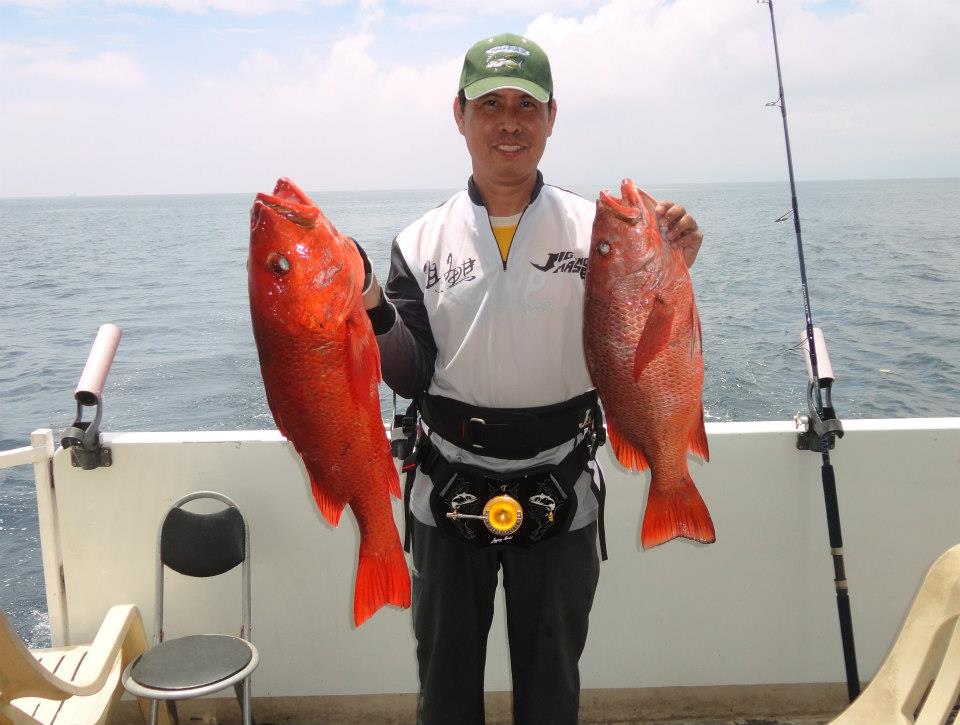
Romel’s Two Snapper
This species is very similar to the more common Mangrove Snapper which inhabits the coastline of the country. These fish are more commonly found on deep reefs, wrecks, and and other structure. Romel caught the larger fish while deepwater jigging, and the other while fishing with live shrimp on the bottom.
I am unsure of the exact species of this snapper. The most common “Red Snapper” is the species is actually found only in the Atlantic ocean.
These fish, along with others that look similar or that are bright red are known as Maya-Maya. These fish are excellent food fish and are quite expensive when purchased from the market.
Giant Trevally ( Caranx ignobilis )

Good Sized GT caught in Cebu City
Common Name: GT, Giant Trevally,
Local Name: Talakitok (Tagalog), Mamsa (Cebuano)
Max Size: 170 cm (80 kgs)
Biodiversity: Marine, Brackish, Freshwater, Reef Associated, Endemic,
Depth: 0 –100 meters
Fishing Season: All Year Long
This species also known as GT, is common through out the country. In Filipino this species is called Talakitok and the Bisaya speaking people call these fish Mamsa. It is the largest of the Trevally species growing to a maximum weight of around 80kgs. Juveniles can be caught a variety of places from reefs, to estuaries, sandy bottom shorelines. The larger adults are more common around deeper reefs, atolls or sea walls. This species can also be caught in Lake Taal in Batangas which was once connected to the ocean via a river.
Angler target these species in a variety of ways which include trolling, bottom fishing, jigging, popping and even bait fishing. The fish in the picture below is a nice GT caught by Biboy in Palawan while Popping.

Popping for GT in Palawan
The larger GT are quite powerful and can quite easily destroy fishing gear that is not up for the challenge. For anglers targeting this species be sure you are using the right gear for the job.

The Taal Lake GT Featured on the Philippine 50 Peso Bill
In recent years the Bankgo Sentral Ng Pilipinas (Central Bank of the Philippines) has featured the Giant Trevally of Lake Taal on their 50 Peso Bill. This is part of the move to highlight unique flora, fauna, and geographic features of the Philippines in efforts to conserve and increase public awareness. Hopefully the unique freshwater GT of Taal will remain a permanent feature of the lake’s ecosystem.


 Fishing The Philippines