Monthly Archives: December 2012
Bigeye Trevally ( Caranx sexfasciatus )

Common Name: Jack, Trevally, Bigeye,
Local Name: Talakitok (Tagalog), Mahinlo (Cebuano)
Max Size: 120 cm (commonly 60 cm)
Biodiversity: Marine, Brackish, Freshwater, Reef Associated, Endemic,
Depth: 0 – 146 meters
Fishing Season: All Year Long
This is a species that can be found all over the islands. This fish is also known as Bigeye Jack or Dusky Jack in English, Talakitok in Tagalog, and Mahinlo in Cebuano. It can grow up to 18kgs though it is more common to catch the smaller juveniles around reefs and estuaries. These fish school and so are great fun to catch in numbers when they are feeding. This species is know to feed primarily at night or at dawn or dusk. They can be taken on a variety of lures and bait . For lures, choose something that mimics an injured fish or shrimp, and for bait live shrimp works well.
The fish pictured above was one of two bigeyes caught on Shell Island, Cebu while fishing a Rapala X-Rap 10.

Nile Tilapia ( Oreochromis niloticus )

Common Name: Tilapia
Local Name: Pla pla (Tagalog), Tilapia(Cebuano)
Max Size:
Biodiversity: Marine, Brackish, Freshwater, Introduced
Depth: 0 – 6 meters
Fishing Season: All Year Long
This is one of the larger growing tilapia species that can be caught in Philippines waters. It is a species that reportedly was introduced into the Philippines in 1972 as a food fish which has been released into many bodies of water deliberately or indirectly by these fish escaping from fish pens. These fish are primarily herbivores and can grow over 3kgs in weight. They also do occasionally take other baits such as worms, and even small lures. This 1.2kg fish took a Berkley plastic trout worm that I wacky rigged on a weightless hook. This fish are excellent food fish and are now a common food fish on Luzon. I have come to see though that these fish are not as highly valued by the Visayas probably due to the vast amount to saltwater fish available.
Red Pacu ( Piaractus brachypomus )

Common Name: Pacu, Pirapatinga,
Local Name: Pacu (Tagalog); Pacu (Cebuano)
Max Size: 88 cm (25 kgs)
Biodiversity: Freshwater
Depth: 0 – 15 m
Fishing Season: All Year Long
Minimum Size Limit: none
Recommended Bait: Masa, Insects,
IUCN Red List Status: Not Evaluated (NE)
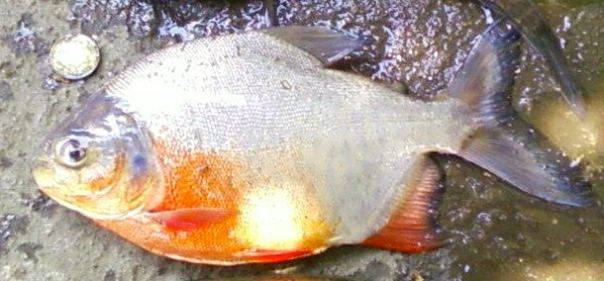
This is a freshwater species of fish that is native to South America. It was introduced into the Philippines from Singapore in the 1980s via the aquarium trade. It is now a common species that can be caught mainly in private ponds though the BFAR has proposed this fish be stocked in rivers and lakes where the water hyacinth plants are a problem. It is currently bred throughout the country in ponds and is readily available in local pet shops.
This fish has the reputation of being a vegetarian, though it is more correctly a omnivore. It can be taken on dough bait, worms, bread and a variety of other bait by fishermen.
These fish grow quite rapidly and can reach weights of over 3kgs. They are also an excellent food fish.
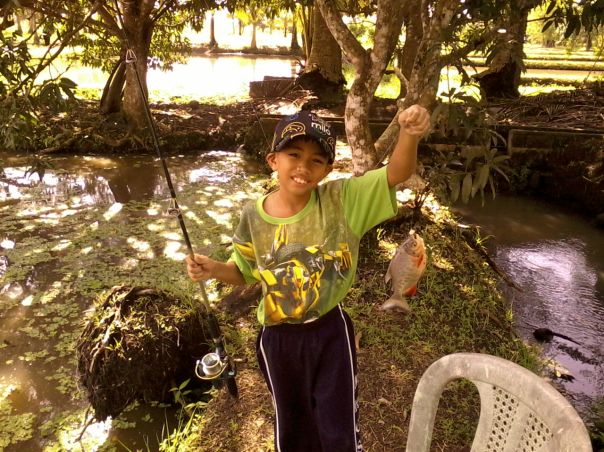
Troy’s Red Pacu from Crismar
If you have any pictures of Pacu you have caught here in the Philippines please send them to me and I will include them in this post 🙂
Rohu Carp ( Labeo rohita )
Common Name: Rohu
Local Name: Carpa
Max Size: 200 cm
Biodiversity: Freshwater, introduced
Fishing Season: All Year Long
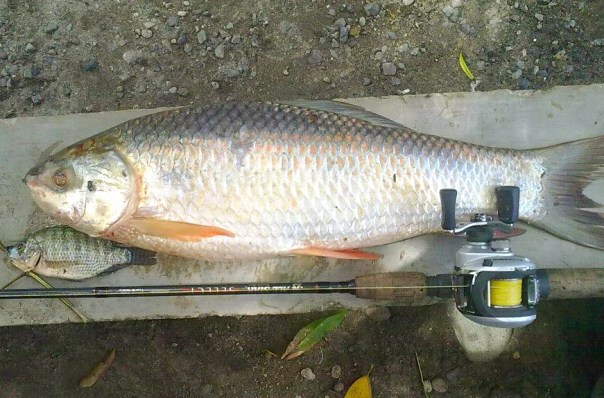
This is an introduced species of carp that is now found around the country. It is found throughout much of South and Southeast Asia and is considered as a non-oily white fleshed fish. These fish are omnivores and so are easily targeted by angler with bait such as worms, bread, dough bait and more. This fish was caught in Tarlac on a worm.
____________________________________
Philippines Rod and Reel Record:
Angler: Jun Davis
Location: Bustos, San Rafael, Bulacan
Date: Feb. 10, 2017
Weight: 2.84 kgs
Bait: molasses paste

Clown Knife Fish ( Chitala ornata)

The Invasive Knife Fish
Common Name: Featherback
Local Name: ??? (Tagalog); ??? (Cebuano)
Max Size: 122 cm
Biodiversity: Freshwater
Depth: 0 – 19 m
Fishing Season: All Year Long
Minimum Size Limit: none
Recommended Bait/Lures: Shrimp, small fish
IUCN Red List Status: Least Concern (LC)

This is a species of fish that was introduced to the country via the aquarium trade from the Thai peninsula (or possibly from South Asia). Being a voracious feeder preying on smaller fish, this fast grow species is quite exciting as a gamefish. Through unknown circumstances these fish ended up in one of the country’s largest lakes, Laguna Lake, and has established itself quite well. These fish can be caught now all over the lake on a variety of lures and live bait. One of the local favorite baits for catching large knife fish is live Ayungin, or Silver Perch. This fish are know to fed primarily at night, however they can be caught during the day as well. Knife Fish over 5kgs have been caught in Laguna Lake.
Local fishermen in Laguna who raise tilapia and bangus in fish pens or others who fish the lake with nets complain that this species is depleting the native populations of smaller species. This has led to what has been known as the “Knife Fish Invasion” which the local media and various individuals affected condemn. They claim this species is near worthless as a food fish and that it destroy the native fish populations. Despite this outcry I remain slightly skeptical of the claims that this fish will wipe out native species. Many people forget that such species as Tilapia, Snakeheads and African Hito are not native.
Sonny caught these nice Knife Fish in Sta. Cruz while fishing in Laguna Lake using live fish as bait.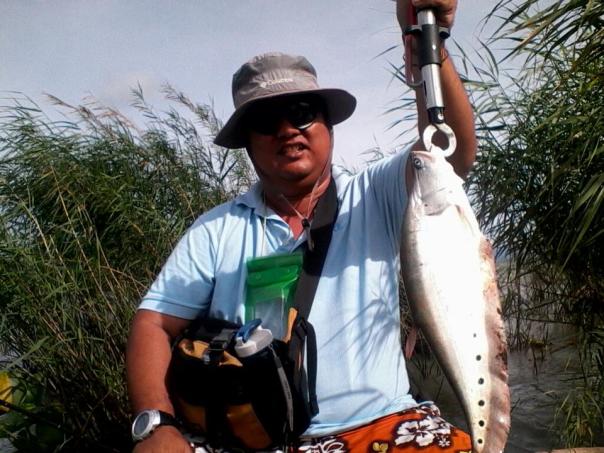

Yellow Fin Tuna ( Thunnus albacares )
Common Name: Tuna, Yellow Fin
Local Name: Tambakol
Max Size: 239cm (commonly 150 cm)
Biodiversity: Marine, Pelagic-Oceanic, Oceanodromous Endemic
Depth: 1 – 250m
Fishing Season: All Year Long
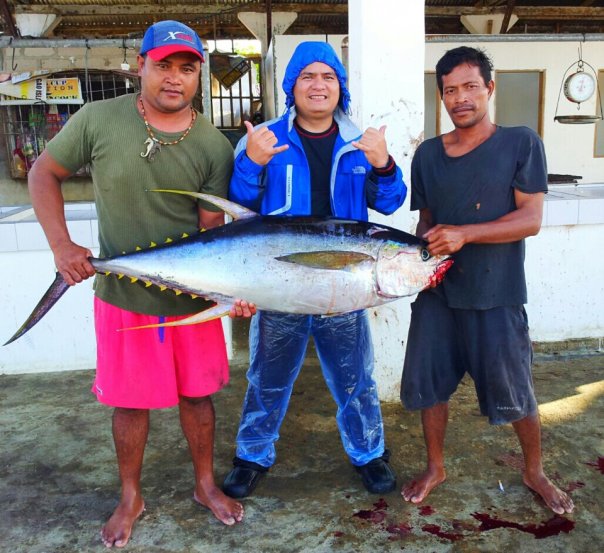
Yellow Fin Tuna are one of the big game fish that can be caught here in the Philippines. The big ones can be fished in certain parts of the country like Siargao, General Santos City, Mindoro, Palawan and along the Philippine Trench. Smaller ones can be caught throughout the islands. Arnold caught this beautiful 36kg specimen in Siargao while drifting live squid down under bright propane lamps. The lamps attract squid which then bring the fish. Smaller ones can be caught when trolling lures and feathers. Often local fishermen target these tuna and other species using long lines that they troll behind their boats. Their long lines sometimes have up to 40+ feathered hooks.
Sea Robin (species??)
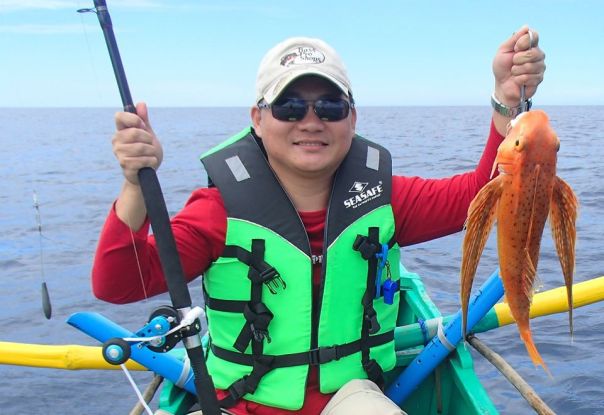
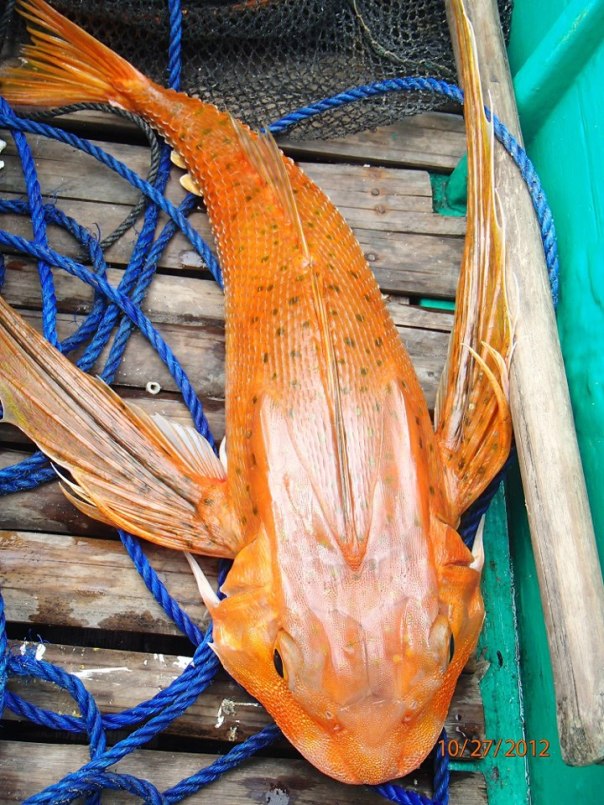
This is a species of fish known as a Gurnard or Sea Robin. They can be identified by their “wings” or large pectoral fins which resemble wings. There are many species of Gurnards which inhabit the ocean floors in both tropical and temperate seas and so I have not yet been able to identify yet just what this species is. This was caught which bottom fishing. Note the large horns on the fish. These apparently contain a venom that can cause severe pain. It is best to be careful when handling one of these fish.


 Fishing The Philippines