Monthly Archives: February 2014
Wolf Herring ( Chirocentrus sp. )
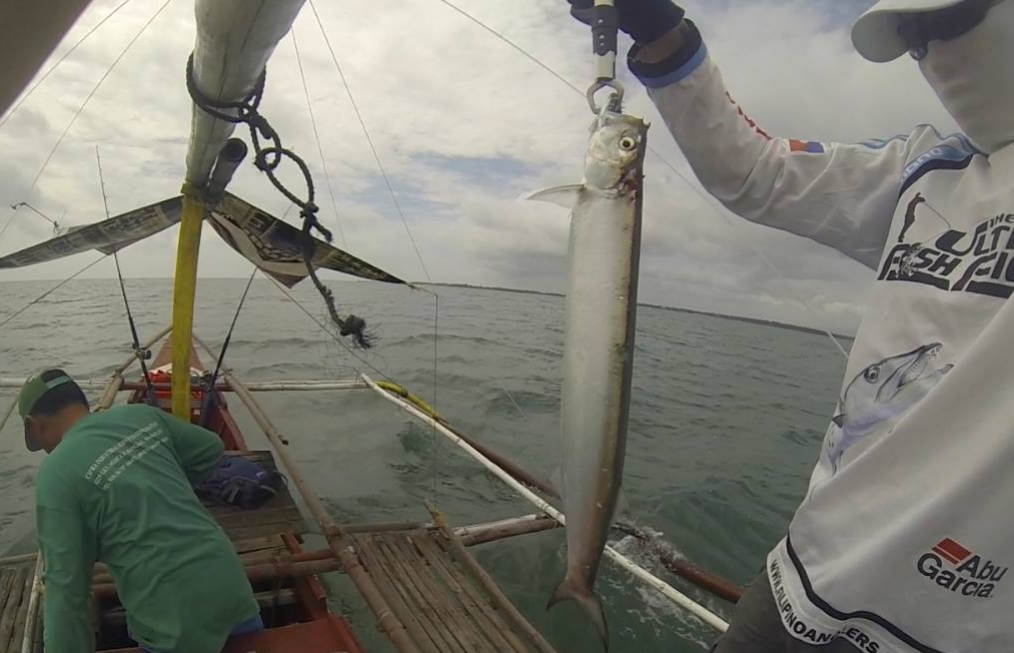
Wolf Herring Caught Trolling In Pagbilao
Common Name: Wolf Herring
Local Name: Buan-Buan, Bidb-bid (miss-identified) (Tagalog); ?? (Bisaya)
Max Size: 146 cm (40+kgs)
Biodiversity: Saltwater, Brackish, Reef associated
Depth: 1 – 120 meters
Fishing Season: All Year Long
Minimum Size Limit: None
Recommended Bait/Lures: Small fish or lures
IUCN Red List Status Status: Not Evaluated (NE)
This sly predator is quite rare and elusive. It is often mistaken for a Tarpon or a Ladyfish due to its silvery sides and shape. It can be distinguished however by its large grotesque fangs and long sardine shaped body. These can be caught on lures, trolling or with live or dead bait.
There are two main species of Wolf Herring that can be found around the country, the Whitefin and the Blackfin. We believe this is the Blackfin (nodus) species however we are not sure.

A Wolf Herring taking on a pins minnow lure

Wayne’s Wolf Herring caught in Romblon
Bighead Carp ( Hypophthalmichthys nobilis )

Good sized Bighead caught in the Pasig River
Common Name: Carp
Local Name: Karpa, Imelda, Black Mass (Tagalog); ??(Bisaya)
Max Size: 146 cm (40+kgs)
Biodiversity: Freshwater, Benthopelagic
Depth: 1 – ?? meters
Fishing Season: All Year Long
Minimum Size Limit: None
Recommended Bait/Lures: masa (dough bait)
IUCN Red List Status Status: Data Deficient (DD)
The Bighead Carp is a species not native to the waters of the Philippines. These fish native to mainland Asia were introduced for use in the aquaculture industry as a food fish. Because of their rapid growth these carp are ideal for fish pond or fish pen grow outs. These carp are now quite well established around the freshwater waterways of Luzon including lakes, rivers and reservoirs. Because of they are an introduced species and unknown to most, they are often called by many different names. Names such as Imelda, Karpa, and Black Mass are just a few.
These carp can be quite a challenge for the sport fisherman because they feed mainly on zooplankton and algae. sweet scented dough baits that dissolve slowly in the water are often used as bait. Larger fish do occasionally surprise and take other types of bait and even an occasional lure. Other methods used locally to catch these fish include Salvage (snagging with treble hooks) and nets.
According to a recent article in a local news paper bighead carp are now more heavily stocked than milkfish in grow out fish pens in Laguna Lake. Such quantity being raised shows that this introduced species is now accepted as a food fish on a large scale.
Blackbelly Triggerfish ( Rhinecanthus verrucosus )
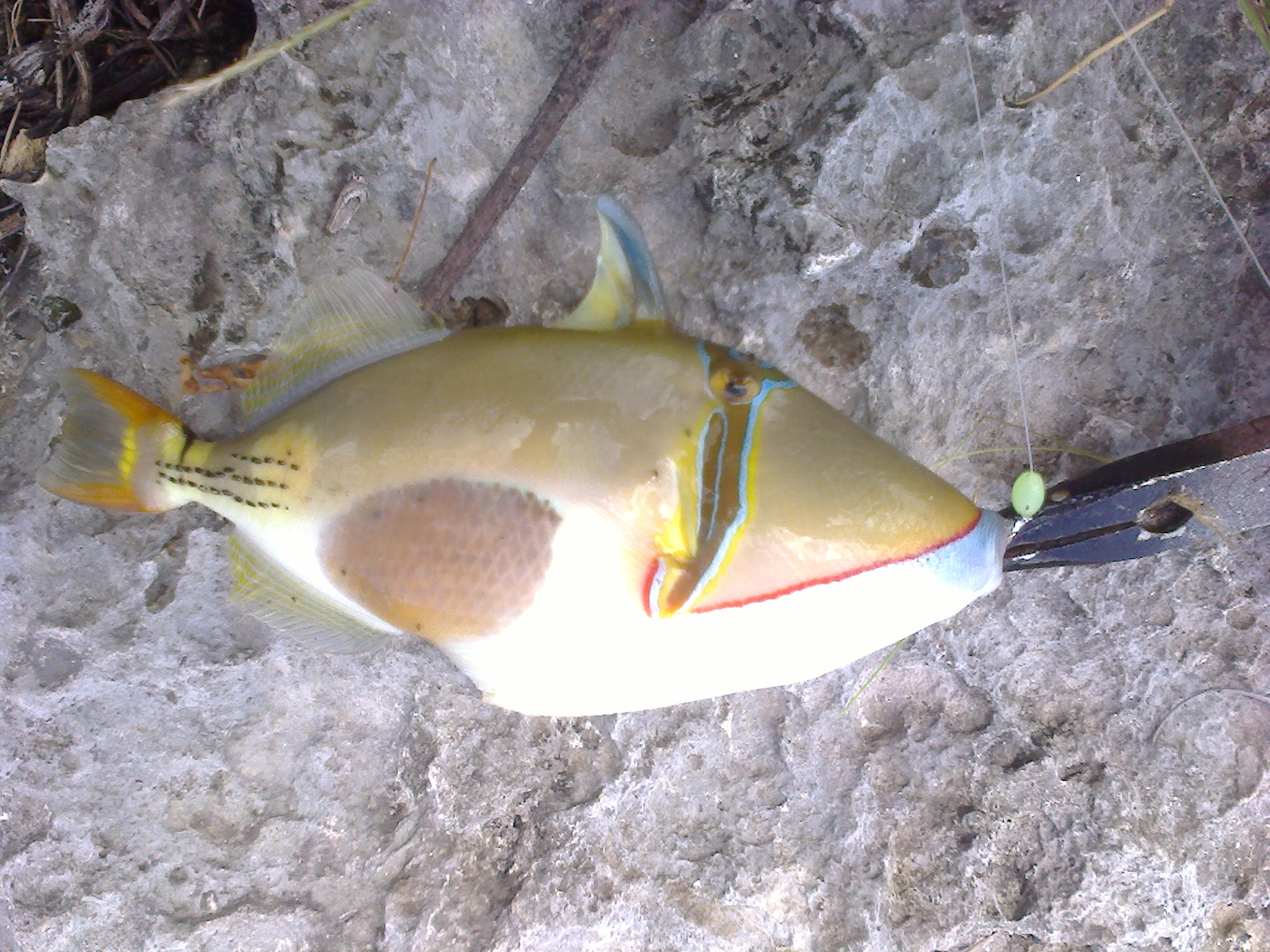
Blackbelly Triggerfish caught off of Mactan Island.
Common Name: Triggerfish
Local Name: Papakol (Tagalog); Pakol (Bisaya)
Max Size: 20 cm
Biodiversity: Marine, Reef-Associated
Depth: 1 – 20 meters
Fishing Season: All Year Long
Minimum Size Limit: None
Recommended Bait/Lures: Shrimp, crabs, other small crustaceans, sand worms
IUCN Red List Status Status: Least Concern
This small species of triggerfish is often miss identified as Picaso Triggerfish which it closely resembles. The large dark patch located towards its tail however is the distinguishing feature that separates it from its artistic relative. These are relatively small and so require small hooks and pieces of bait to catch. This species along with other small triggerfish species are notorious for picking apart large well presented baits and frustrating angler who are after larger fish.
Black Pomfret ( Parastromateus niger )

Black Pomfrets caught in the Tanon Strait off Guihulngan, Negros
Common Name: Pomfret,
Local Name: Duhay, Pampano (Tagalog); ?? (Cebuano)
Max Size: 75 cm
Biodiversity: Marine, Reef Associated
Depth: 1 – 100+ m
Fishing Season: All Year Long
Minimum Size Limit: None
Recommended Bait/Lures:
IUCN Red List Status: Not Evaluated (NE)
We received a report recently that these fish are being caught in the Tanon Strait in between Negros and Cebu. They are quite rare in those waters and the local fishermen do not have a local name for them. These fish are mainly caught in nets though they are likely to be taken on sabiki type rigs because they feed mainly on zooplankton.
Green Jobfish ( Aprion virescens )

3kg Jobfish speared off Punta Engano, Mactan
Common Name: Snapper, Jobfish, Aprion
Local Name: Maya Maya (Tagalog), Malaguno, Sagisihon, (Cebuano)
Max Size: 112 cm (15.4 kgs)
Biodiversity: Marine, Reef Associated
Depth: 1 – 180 m
Fishing Season: All Year Long
Minimum Size Limit: 15 inches
Recommended Bait/Lures: Shrimp, small fish and crustaceans; Jigs
IUCN Red List Status: Not Evaluated (NE)
The Green Jobfish belongs to the family of Jobfish and Snapper and is common around the Philippine Islands. This fish is a predator feeding on small fish, squid and anything else that it can catch around reefs. The can be found quite deep however it is also common to catch these fish on shallow reefs.
These fish have thick torpedo shaped bodies with a white flaky flesh. It has a slight fishy smell and taste making it less desirable than its relative Snapper species, but delicious enough to be considered good table fare. Green Jobfish are easy to identify because of their olive green color with blue highlights along with their neatly printed large scales.
Jobfish are often taken bottom fishing, jigging and also spearfishing. As seen below in one of the pictures, they can also be occasionally taken trolling in shallower water.
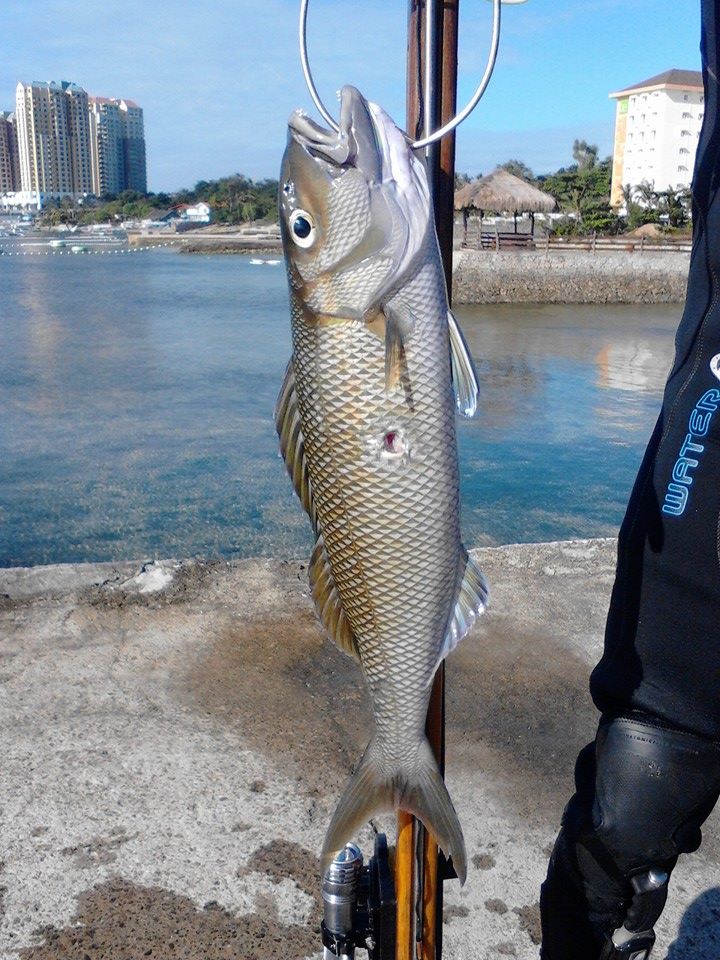
Green Jobfish Speared off Mactan Island
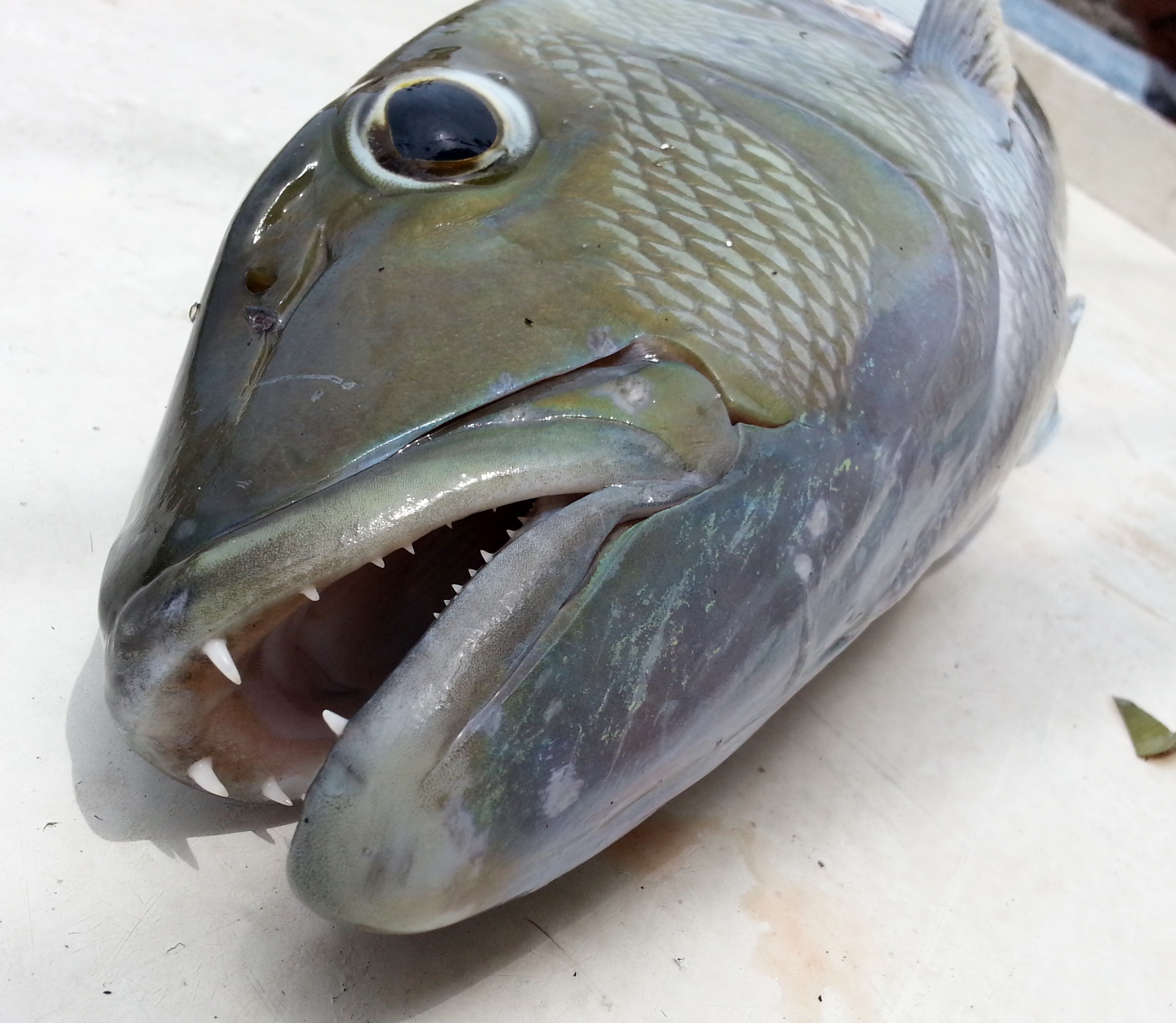

Rod’s Jobfish caught while trolling!
Fly Fishing Seminar (1/23/13) in Cebu City

We held a Fly Fishing Seminar and Casting session on Feb. 23, 2014. A visiting experienced fly fisherman, Sven Cederberg shared some of his knowledge and expertise on fly fishing basics, tactics and fly casting. The seminar was held at Vista Mar Beach Resort located on Mactan Island in Cebu City. We had six people that attended and had a great time hearing from Sven and learning more about fly fishing.
Here are some pictures:
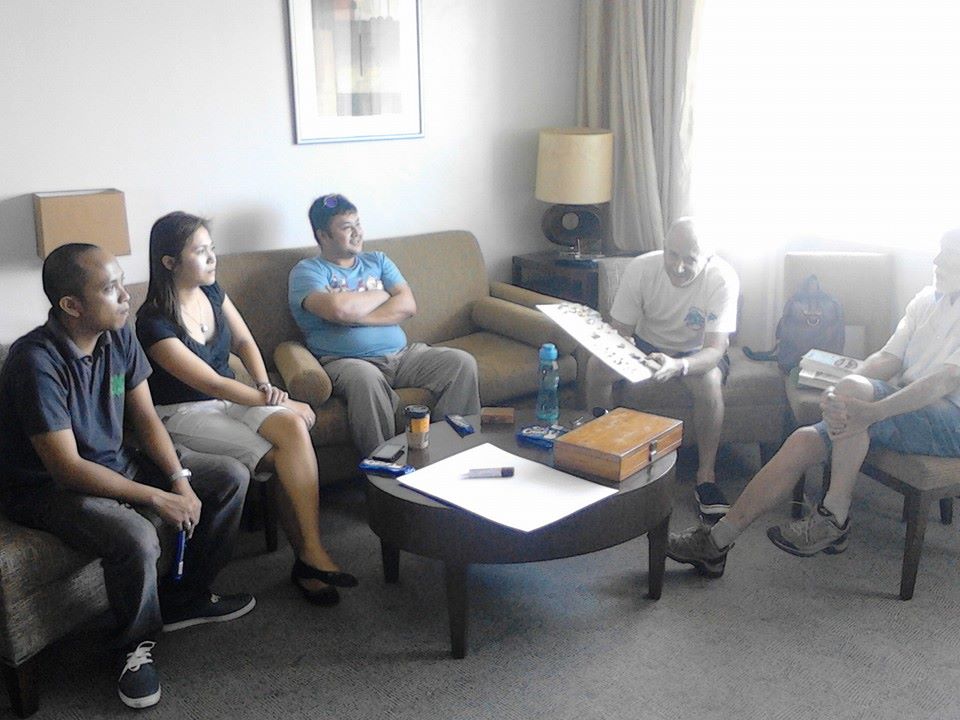
The Group Listen to Sven’s Saltwater Fly Fishing Tactics

A Sampling of Sven’s Fly Box for Fresh and Saltwater
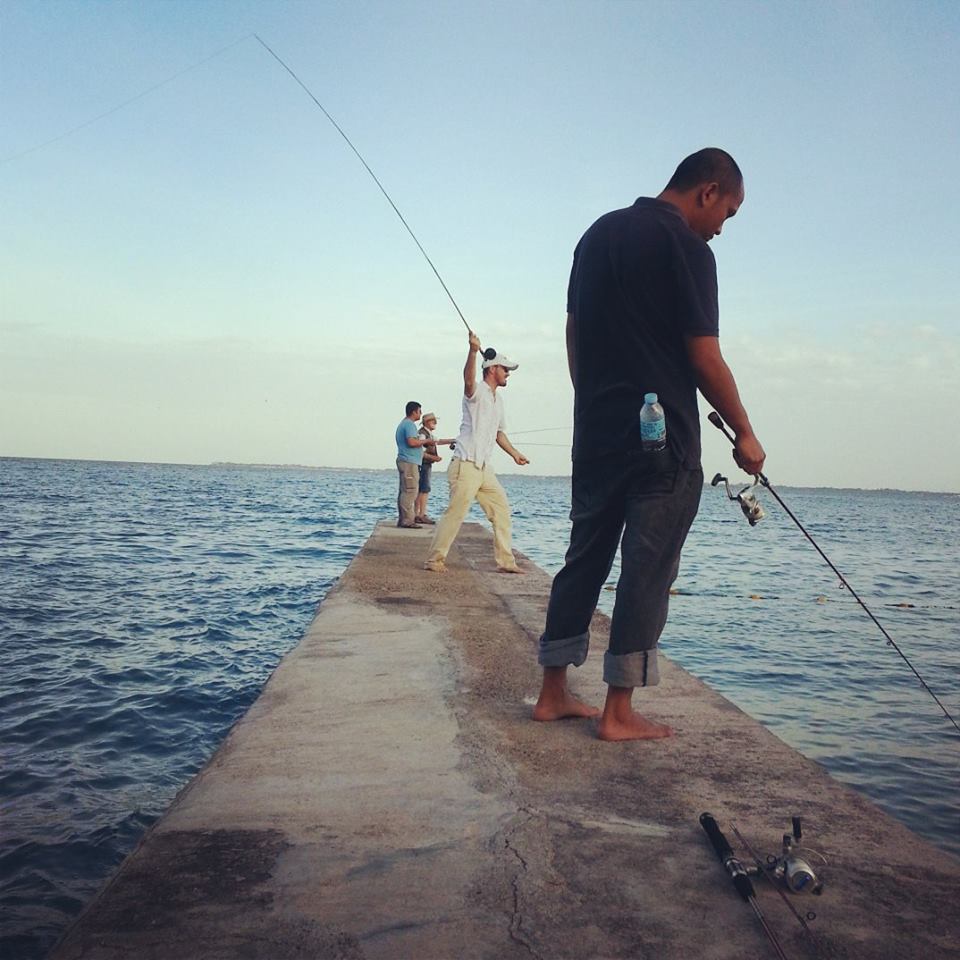
A shot of us during the casting session after the seminar.
The seminar consisted of an introduction by Sven to who he is and where he fishes. He shared his experiences fishing both fresh and salt water in both Sweden and New Zealand. He then shared some of the basics of fly fishing and showed us some of his go to patterns for both fresh and salt water. Sven also showed us the Perfect Loop knot he uses for connecting his fly line to his leader. After the informative seminar we all headed to the jetties on the water to practice casting. We had a couple looks from some small barracuda but no fish landed.
If you are visiting Cebu and would like to interact with local anglers as well as share your experience or expertise let us know. We would love to organize more seminars, training/fishing sessions or get togethers.


 Fishing The Philippines