Monthly Archives: October 2014
Maori Sea-Perch ( Lutjanus rivulatus )

Maori Sea Perch caught in Subic Bay
Common Name: Snapper, Rubberlip Snapper, Sea Perch,
Local Name: Maya Maya, Bambangon (Tagalog), Maya-Maya, Kilawan (Cebuano)
Max Size: 80 cm ( 11 kgs )
Biodiversity: Marine, Reef-Associated
Depth: 10 – 100 m
Fishing Season: All Year Long
Minimum Size Limit: 10 inches
Recommended Bait/Lures: Shrimp, small fish and crustaceans
IUCN Red List Status: Not Evaluated (NE)

Photo courtesy of Andrew Leighton
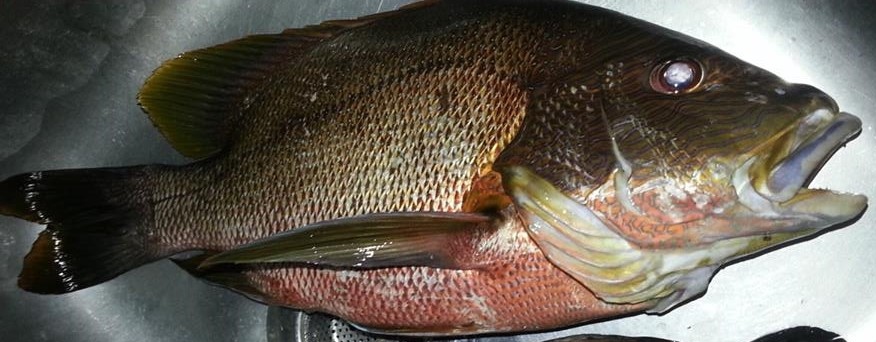
Note the pattern on the face
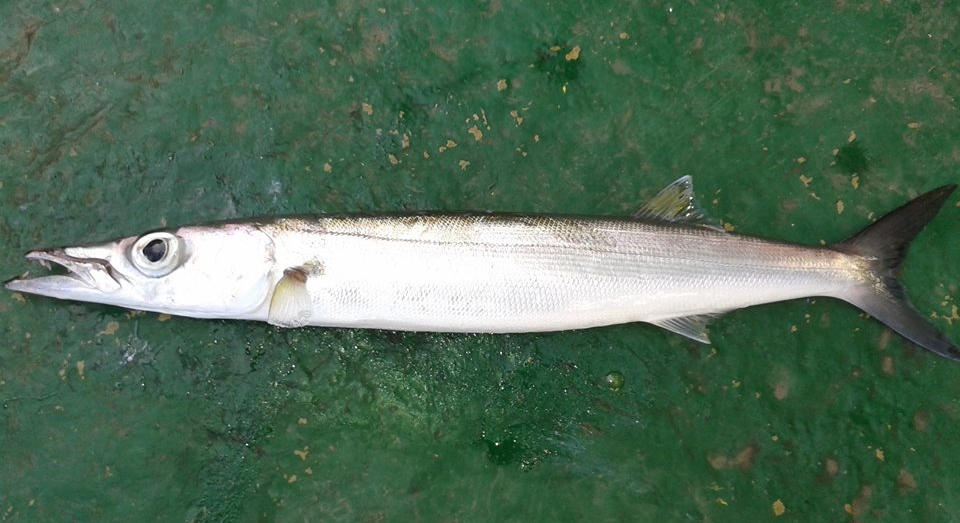
Bigeye Barracuda ( Sphyraena forsteri )
Common Name: Barracuda, Javelin, Sea-Pike
Local Name: Turcilyo, Batig, Balyos (Tagalog) Tabangko (Cebuano)
Max Size: 75 cm
Biodiversity: Marine, Reef-Associated
Depth: 1 – 300 m
Fishing Season: All Year Long
Minimum Size Limit: None
Recommended Bait: Shrimp, Squid and Fish
IUCN Red List Status: Not Evaluated (NE)
The Bigeye Barracuda is another of the species from the Sphyraedinae genus. Their large eye is the most distguishing feature that helps in their identification. The Biegeye Barracuda are generally small in size and found in schools around reefs around the country. Anglers are likely to catch these fish while fishing small lures or bait such as shrimp or fish.

Wayne’s Bigeye Cuda from Romblon
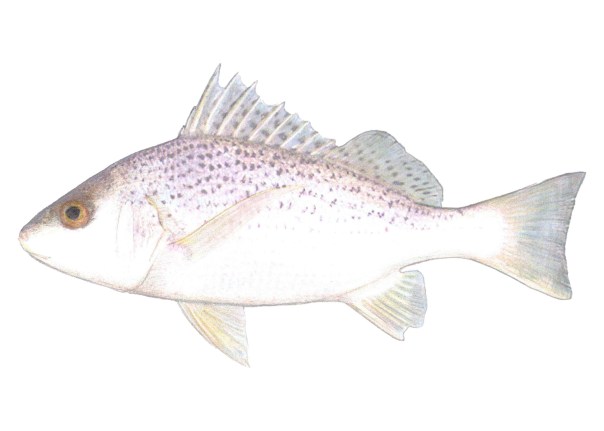
Silver Grunt ( Pomadasys argenteus )
Common Name: Bream, Grunter, Grunt, Javelin
Local Name: Bakoko, Aguot (Tagalog), Ago-ot, Likti (Cebuano)
Max Size: 70 cm
Biodiversity: Marine, Brackish, Freshwater
Depth: 1 – 115 m
Fishing Season: All Year Long
Minimum Size Limit: None
Recommended Bait: Shrimp, worms and crustaceans;
IUCN Red List Status: Least Concern (LC)
This is one of a couple fish that is known around the islands as Bakoko or Ago-ot. It is distiguished from the larger Bakoko ( Acanthropagrus pacificus ) by its more elongated snout and small black spots on its sides. These fish are encountered most often by anglers fishing is estuaries or large rivers that flow into the sea. Bakoko are known to be shrimp eaters and bait fishermen use small shrimp either live or dead to catch them.

Photo courtesy of Mikko C.
Gudgeon ( Eleotris sp. )

Aeds Gudgeon on a lure.
Common Name: Gudgeon, Sleeper,
Local Name: (Tagalog), Cadurog, Palog, Lagnas (Cebuano)
Max Size: cm
Biodiversity: Marine, Brackish, Freshwater
Depth: 0 – ?? m
Fishing Season: All Year Long
Minimum Size Limit: None
Recommended Bait: Shrimp, worms and crustaceans;
IUCN Red List Status:
This is a fish of the genus Eleotris which are known as Sleepers or Gudgeons. Similar to Gobies and Snakeheads, Sleepers often sit motionless on the riverbed waiting for prey to pass by. They a generally quite small and of little value to sport fishermen however they can grow to impressive sizes of over 1 ft in length. Anglers are most likely to encounter these fish when fishing in rivers and estuaries with bait or small lures.
Because of the diversity within this genus of fish we have simply listed the genus.
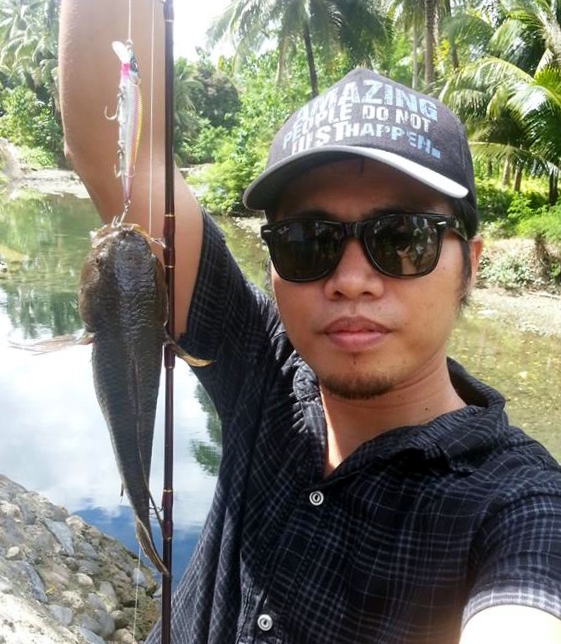
Note the thick body of the Gudgeon
Fire-Tail Devil ( Labracinus cyclophthalmus )
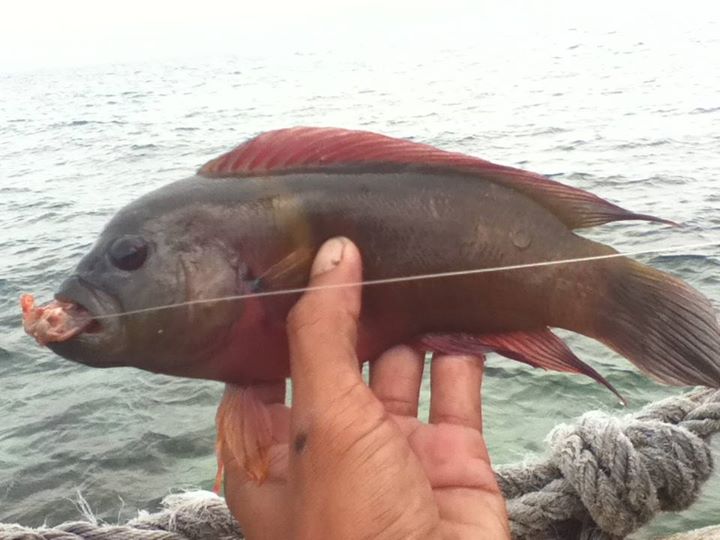
Dennis’ Dottyback
Common Name: Dottyback, Devil Fish
Local Name: ** (Tagalog), ** (Cebuano)
Max Size: 23.5 cm
Biodiversity: Marine, Reef-Associated
Depth: 2 – 20 m
Fishing Season: All Year Long
Minimum Size Limit: None
Recommended Bait: Shrimp, small fish and crustaceans;
IUCN Red List Status: Not Evaluated (NE)
This is a small reef fish that is found around the islands in shallow reefs. They look like a cross between a wrasse and a grouper, however are not related to either. ** We are not aware of this fish’s name here in the Philippines probably because it is usually miss-identified as either a wrasse or a grouper.
Freshwater Snapper ( Lutjanus fuscescens )

Common Name: Snapper, Spotted Sea Bass,
Local Name: Maya Maya, Pargo (Tagalog), Tandungan, Mangagat (Cebuano)
Max Size: 100 cm
Biodiversity: Brackish, Freshwater
Depth: 1 – ?? m
Fishing Season: All Year Long
Minimum Size Limit: None
Recommended Bait/Lures: Shrimp, small fish and crustaceans; Jigs, lures
IUCN Red List Status: Not Evaluated (NE)
This is a another snapper species from the Lutjanidae family that is found in the Philippine waters. This particular species if quite a bit more rare than the Mangrove Snapper and is reportedly only caught in estuaries and rivers. They are distinguished from other snapper species by their olive green to brown color with a whitish underbelly. They also have large bands on their sides and a large dark blotch towards their tails. According to reports these are abundant in Mindanao around Dipolog City. They reportedly can reach up to 25kgs.
This species of snapper seems to be unique to South East Asia as it is only reportedly be documented in the Philippines, Indonesia, New Guinea, New Caledonia and the Solomon Islands and China. That makes this a great species for anglers to target who are looking for rare or unique fish.


Mark Omilig 7.5kg Freshwater Snapper
_______________________________________________________________
Philippine Rod and Reel Record:
Angler: Luigi Beja
Location: Cagayan De Oro, Mindanao
Date: December 31, 2016
Weight: 13 Kilograms

Monster Tilapia from the Pasig

Here is an amazing catch from the Pasig River in Metro Manila. This is a 2 kg Pla-pla or Nile Tilapia ( Oreochromis niloticus ) caught by Bipoy. This is undoubtedly an escaped convict from one of the fish pens in Laguna Lake as these fish are not native to the Philippines. Anglers catch tilapia, knife fish, sea catfish, and many other species of fish in the Pasig. It is great to see this river that was once considered “dead” because of pollution to have great signs of life.
Have you caught a nice fish in the Pasig? Send us your photos and we will share them here.
<><
Yellow Spotted Trevally ( Carangoides fulvoguttatus )
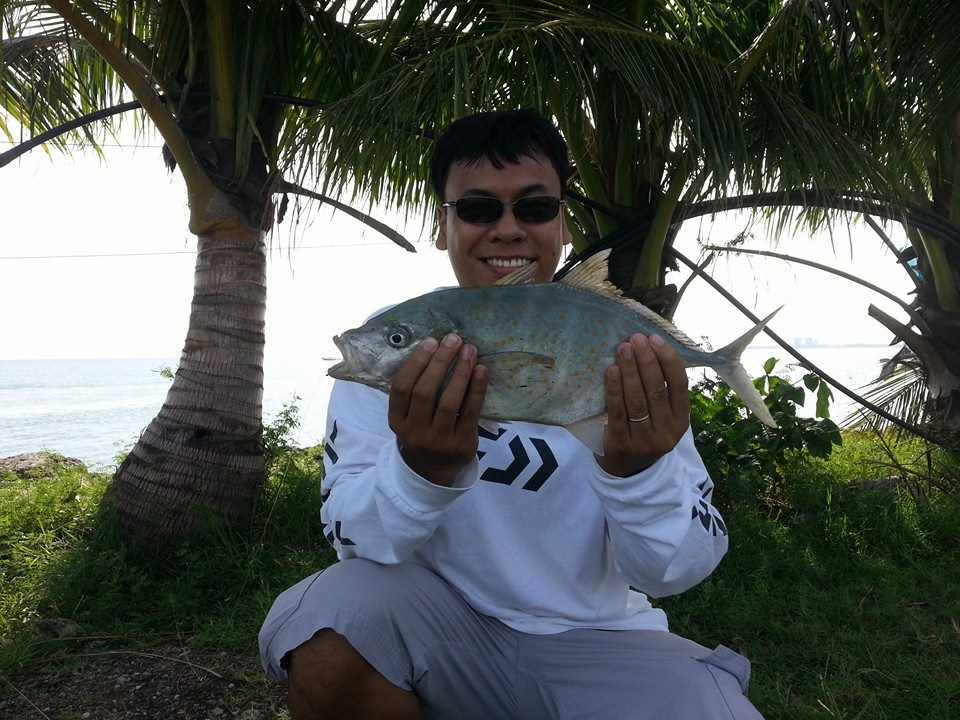
Emmanuel’s 1.2kg Goldspot Trevally caught in Cebu
Common Name: Trevally, Kingfish, Jack, Tarrum
Local Name: Talakitok (Tagalog); Mamsa, Subad-subad (Cebuano)
Max Size: 120 cm (18 kgs)
Biodiversity: Marine, Brackish, Reef Associated
Depth: Surface – 100 m
Fishing Season: All Year Long
Minimum Size Limit: None
Recommended Bait/Lures: small minnow lures, flies, and shrimp, crabs, squid
IUCN Red List Status: Not Evaluated (NE)
This is a species of trevally found around the islands that can be distinguished by its golden colored spots. This species like other trevally species can be found alone or in schools often patrolling the edge of reefs, rocks or grass beds. They can grow quite large however the majority of these fish caught here tend to be around 1kg in size. Anglers are likely to catch one of these trevallys when casting lures from the shore off rocks or beaches near reefs.
Like most trevally species these fish make great table fare. They taste great when cooked a variety of ways including; grilled, deep friend, or cooked in one of many local saucy recipes.
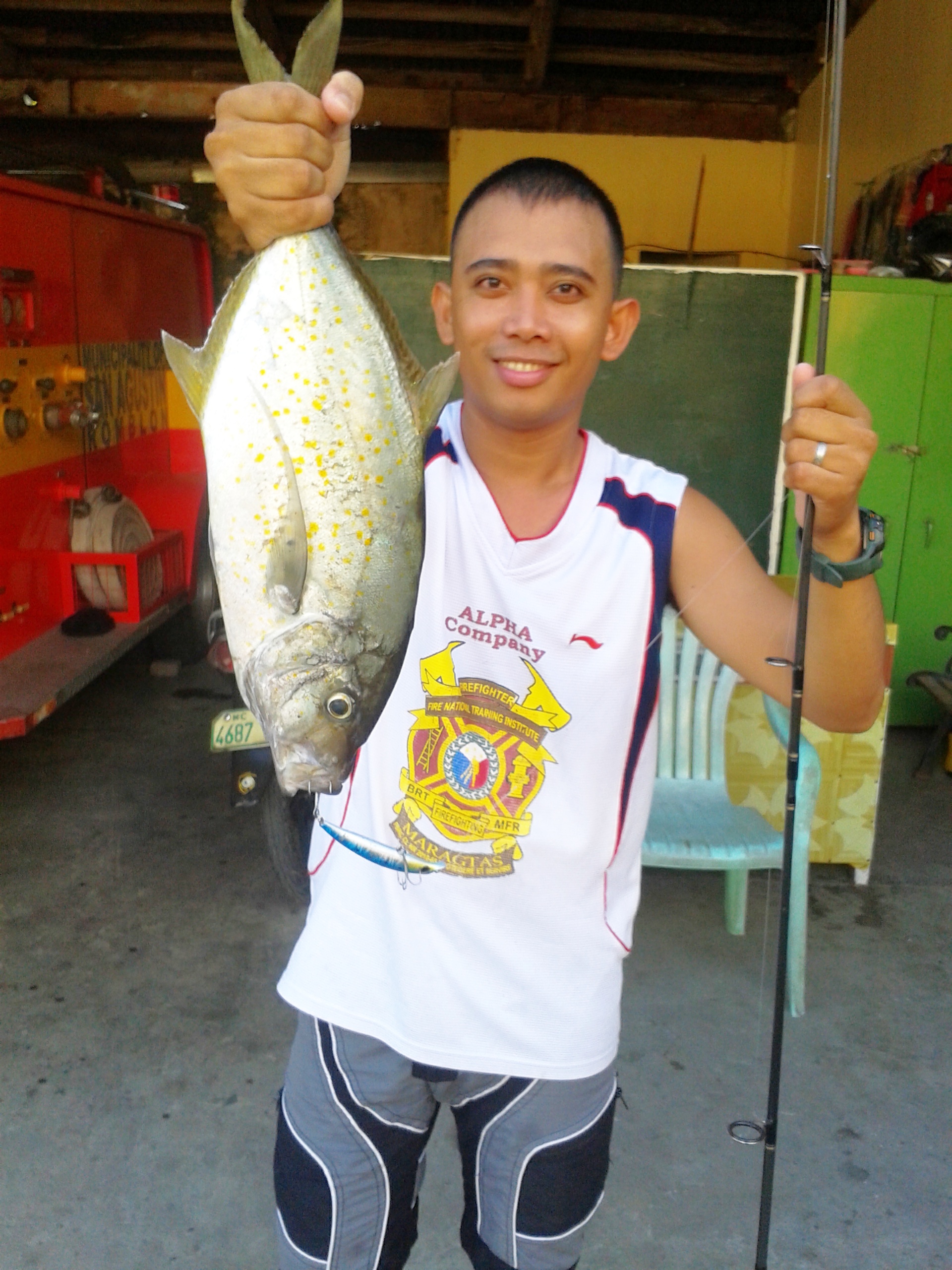
Wayne’s Yellow Spotted Trevally from Romblon


 Fishing The Philippines