Author Archives: benaiahfogle
Freshwater Snapper ( Lutjanus fuscescens )

Common Name: Snapper, Spotted Sea Bass,
Local Name: Maya Maya, Pargo (Tagalog), Tandungan, Mangagat (Cebuano)
Max Size: 100 cm
Biodiversity: Brackish, Freshwater
Depth: 1 – ?? m
Fishing Season: All Year Long
Minimum Size Limit: None
Recommended Bait/Lures: Shrimp, small fish and crustaceans; Jigs, lures
IUCN Red List Status: Not Evaluated (NE)
This is a another snapper species from the Lutjanidae family that is found in the Philippine waters. This particular species if quite a bit more rare than the Mangrove Snapper and is reportedly only caught in estuaries and rivers. They are distinguished from other snapper species by their olive green to brown color with a whitish underbelly. They also have large bands on their sides and a large dark blotch towards their tails. According to reports these are abundant in Mindanao around Dipolog City. They reportedly can reach up to 25kgs.
This species of snapper seems to be unique to South East Asia as it is only reportedly be documented in the Philippines, Indonesia, New Guinea, New Caledonia and the Solomon Islands and China. That makes this a great species for anglers to target who are looking for rare or unique fish.


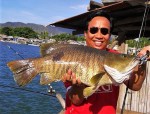
Mark Omilig 7.5kg Freshwater Snapper
_______________________________________________________________
Philippine Rod and Reel Record:
Angler: Luigi Beja
Location: Cagayan De Oro, Mindanao
Date: December 31, 2016
Weight: 13 Kilograms

Monster Tilapia from the Pasig

Here is an amazing catch from the Pasig River in Metro Manila. This is a 2 kg Pla-pla or Nile Tilapia ( Oreochromis niloticus ) caught by Bipoy. This is undoubtedly an escaped convict from one of the fish pens in Laguna Lake as these fish are not native to the Philippines. Anglers catch tilapia, knife fish, sea catfish, and many other species of fish in the Pasig. It is great to see this river that was once considered “dead” because of pollution to have great signs of life.
Have you caught a nice fish in the Pasig? Send us your photos and we will share them here.
<><
Yellow Spotted Trevally ( Carangoides fulvoguttatus )
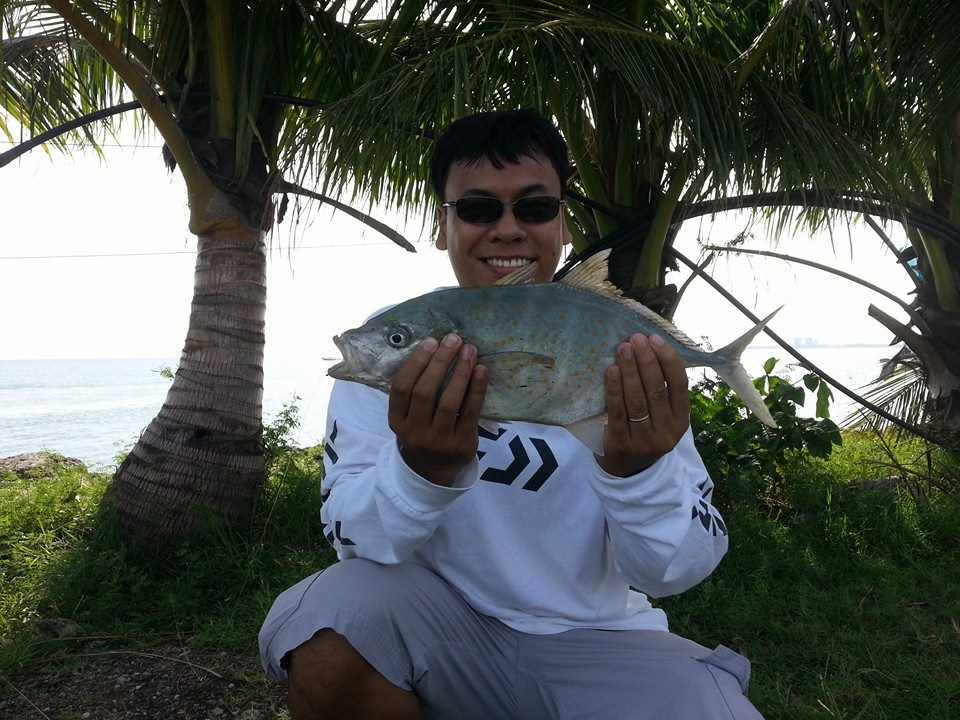
Emmanuel’s 1.2kg Goldspot Trevally caught in Cebu
Common Name: Trevally, Kingfish, Jack, Tarrum
Local Name: Talakitok (Tagalog); Mamsa, Subad-subad (Cebuano)
Max Size: 120 cm (18 kgs)
Biodiversity: Marine, Brackish, Reef Associated
Depth: Surface – 100 m
Fishing Season: All Year Long
Minimum Size Limit: None
Recommended Bait/Lures: small minnow lures, flies, and shrimp, crabs, squid
IUCN Red List Status: Not Evaluated (NE)
This is a species of trevally found around the islands that can be distinguished by its golden colored spots. This species like other trevally species can be found alone or in schools often patrolling the edge of reefs, rocks or grass beds. They can grow quite large however the majority of these fish caught here tend to be around 1kg in size. Anglers are likely to catch one of these trevallys when casting lures from the shore off rocks or beaches near reefs.
Like most trevally species these fish make great table fare. They taste great when cooked a variety of ways including; grilled, deep friend, or cooked in one of many local saucy recipes.
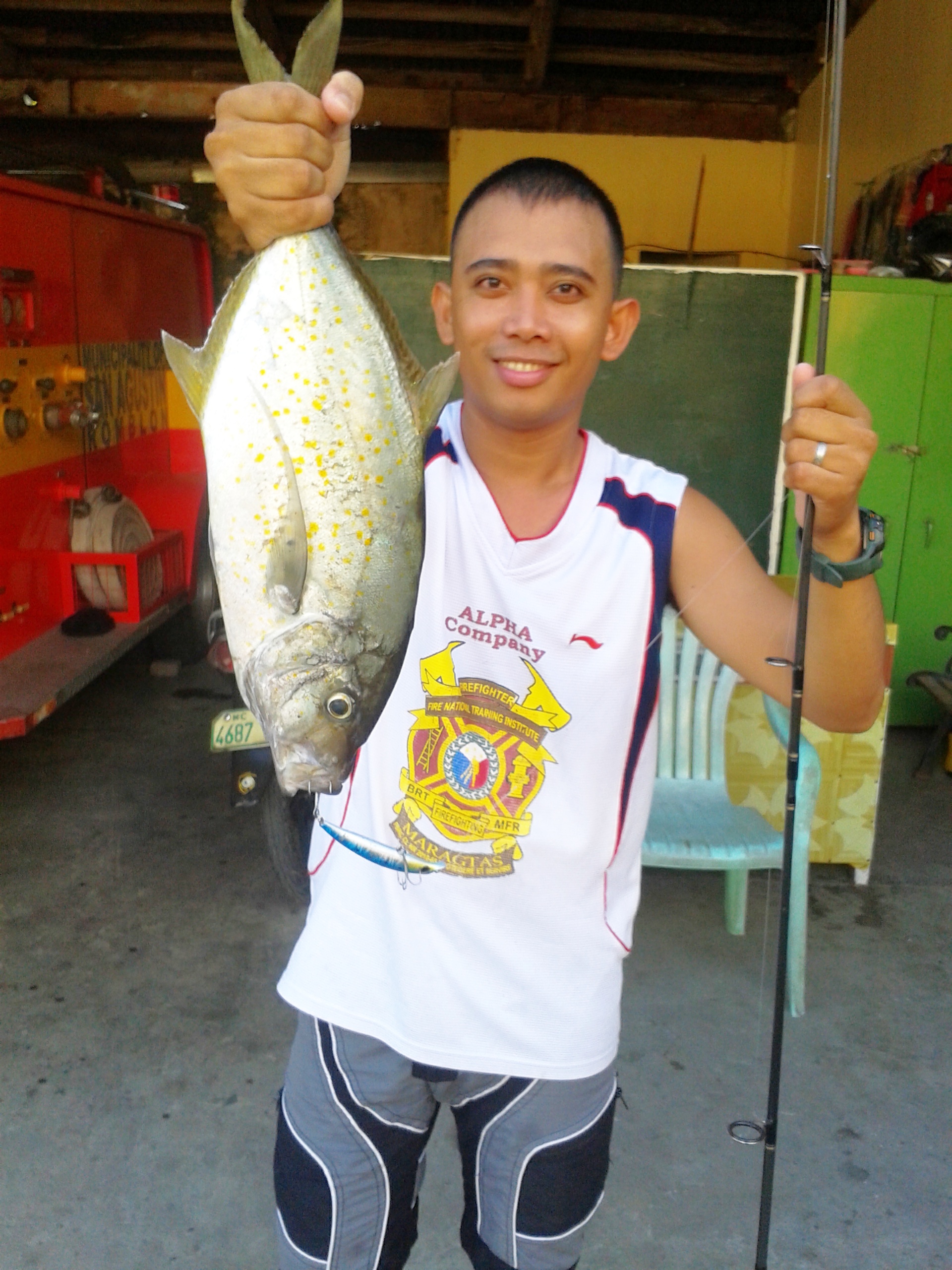
Wayne’s Yellow Spotted Trevally from Romblon
Barracuda Tackle and Tactics
This article is about fishing fishing for barracuda from shore with lures. Trolling for large barracuda is another article in itself for another time. Our hope is that anglers can learn a little more about this wonderful fish and experience the thrill of catching them on lures! Enjoy!
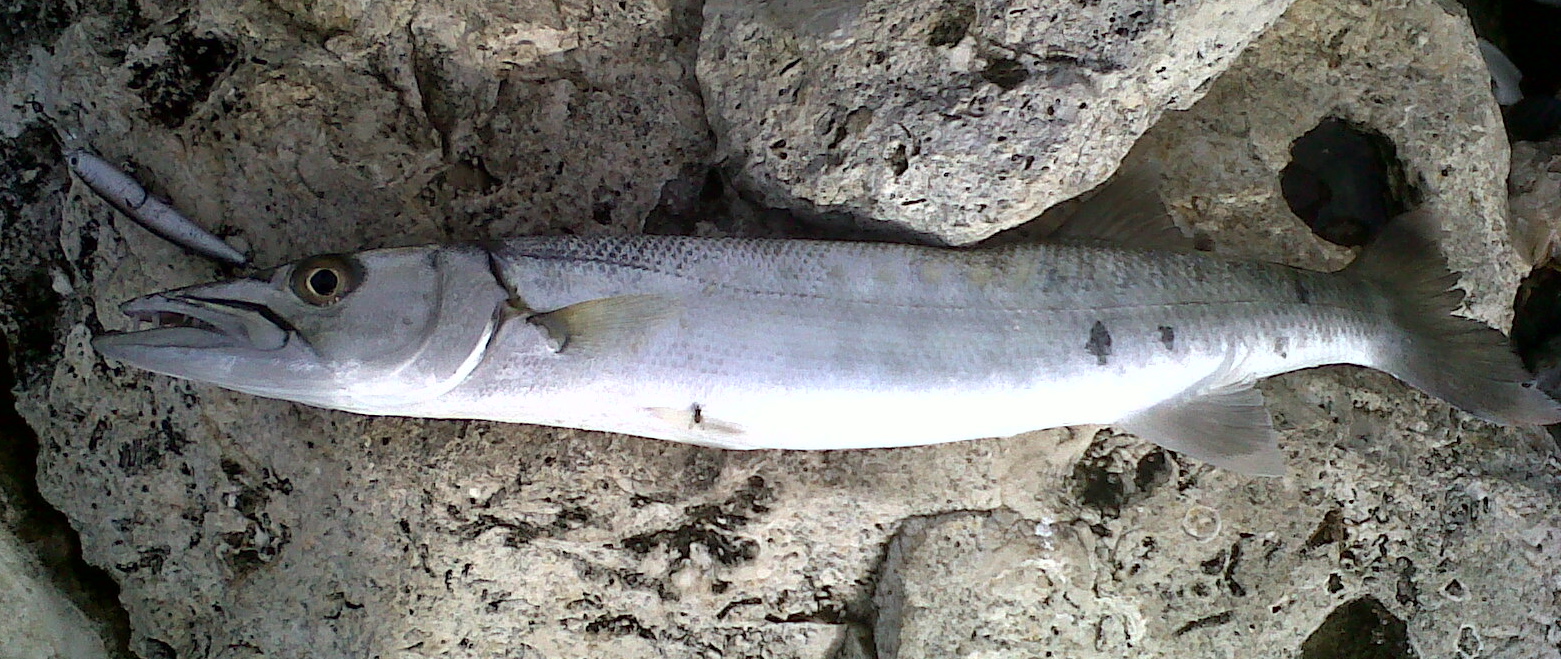
A healthy Barracuda caught on a lure
Barracuda are a torpedo shaped saltwater fish that can be found all around the world. There a couple species of Barracuda that are found in the Philippines of which the Great Barracuda ( Sphyrena barracuda ) is the most notable. Barracuda feed on just about any fish that they can manage to strike. They have razor sharp teeth which are notorious for their slicing capabilities. If is not uncommon for a baitfish to be severed in half by a strike from a barracuda. Barracuda have a silvery color with a dark barred back. In shallow water they can change the color of their bars from a dark almost black color to a light brown color that helps them blend into the sea floor.

Barracuda can be caught in a variety of marine environments. Smaller barracuda, called Juveniles, are mainly caught around reefs, estuaries, and coastlines, while the larger barracuda are usually caught around deeper reefs and offshore. Juvenile Barracuda often form large schools while larger adults are more solitary.
Tackle
A Medium to Medium/heavy lure casting setup will suffice for most barracuda and other coastal fish that can be caught around the Philippines on lures. Anglers here typically use 10 – 15lbs mono line or 12 – 30lbs braided line. More important than the size of main line used is the size of the leader line. A safe choice is a small section of solid or stranded trace wire. Fluoro and mono can be used and will be fine for most of the fish caught however occasionally cudas will strike a lure head on and slice neatly through even heavy mono and flouro.
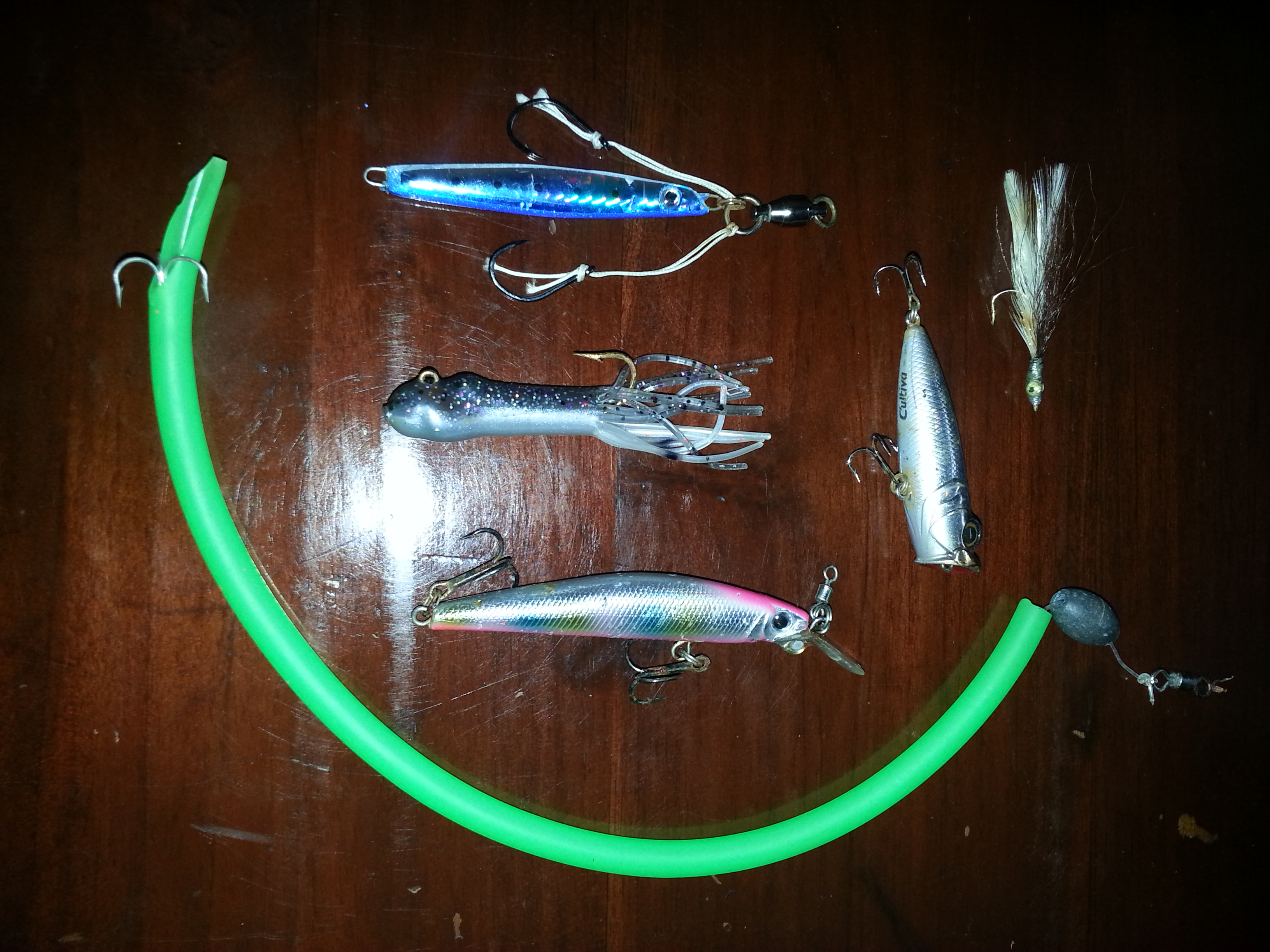
A few of the many lures that work for Barracuda
Barracuda will strike almost any lure that is thrown at them. More important than the lure used is the type of retrieve used. Anglers usually have their preferred lures and colors which they feel work best. Some of the most commonly used lures include: soft plastic flukes, minnows and swimbaits; crankbaits, vibe lures, cuda tubes, spoons and jigs, feathers and flies, poppers and just about anything else :-). Catching barracuda on live and dead bait is an art that we will not discuss in this article.
Tactics
The retrieve is one of the most important things when fishing for barracuda. It can make the difference between no fish and no stop action. Barracuda can’t resist an injured looking fish that is trying to get away. The trick for anglers is to make their lures imitate that frantic action. Despite the Cudas preference to fleeing baitfish their preference seems to vary quite a lot day to day. We recommend that you try a variety of retrieves until you figure out what their interested in. Try a fast retrieve with brief pauses, or a slow sweeping rod movement with longer pauses in between. Slow retrieves with short sharp movements is also good.
By far the best time to fish for Barracuda is right around high tide. Barracuda will often sit in one area and not so much as look at passing fish until the tide changes. High tide usually draws the fish closer to shore to feed on small baitfish that are moving about in the tidal areas.

Barracuda are also a fun species to catch on flies
Because of their teethy mouths Barracuda can be difficult to land. Often the barracuda’s thrashing will dislodge a lure from their mouth and allow them to escape. Anglers call this spitting the hook.
Barracuda are great fun to fish for a variety of reasons. They readily strike just about any lure when the tide is right and do not require much knowledge, skill or technique in that regard. The smaller barracuda also move about in school and can often be caught in numbers. The violent thrashing strikes of Cudas also never get old. They are incredibly fast in the water and their sudden strikes often catch angler by surprise. It is also not uncommon for barracuda to strike feet or inches from shore. Barracuda will often use structures in the water to help corner fish from escaping.
Barracuda are edible and are their flesh is considered fair though it is not encouraged they can be kept and eaten. There is a risk of Ciguatera Poisoning when eating this fish because they are at the top of the food chain around reefs and often consumer smaller reef fish that have Ciguatera.
Fishing for barracuda can be useful along with fun because barracuda make great bait for deep sea fishing. Smaller cudas can be sliced into steaks and used to catch grouper, snapper and other deep sea species. Larger cudas can be filleted which can be sliced into strips.
Care needs to be exercised when handling barracuda, even small ones, because of their razor sharp teeth. Barracuda are not known to be the best fighting fish in the sea however they do often thrash about when they are handled. Tools such as needle nose pliers, hook removers and lip grips are handy to have when fishing for barracuda to keep your fingers from harm.
By Benaiah J Fogle
Swordfish ( Xiphias gladius )

Ram’s Sword caught on live squid
Common Name: Swordfish, Broadbill
Local Name: ? (Tagalog); Pugot, Malasugi (Bisaya)
Max Size: 455 cm ( 650 kgs)
Biodiversity: Marine, Pelagic-Oceanic
Depth: 0 – 800+ meters
Fishing Season: All Year Long
Minimum Size Limit: None
Recommended Bait/Lures: Fish, Squid
IUCN Red List Status Status: Least Concern
Swordfish are a prized catch here in the Philippines because they are quite rare and also because they have the best tasting flesh of all the billfish. Swordfish are known to stay at great depths during the day and to move closer to the surface to feed at night.
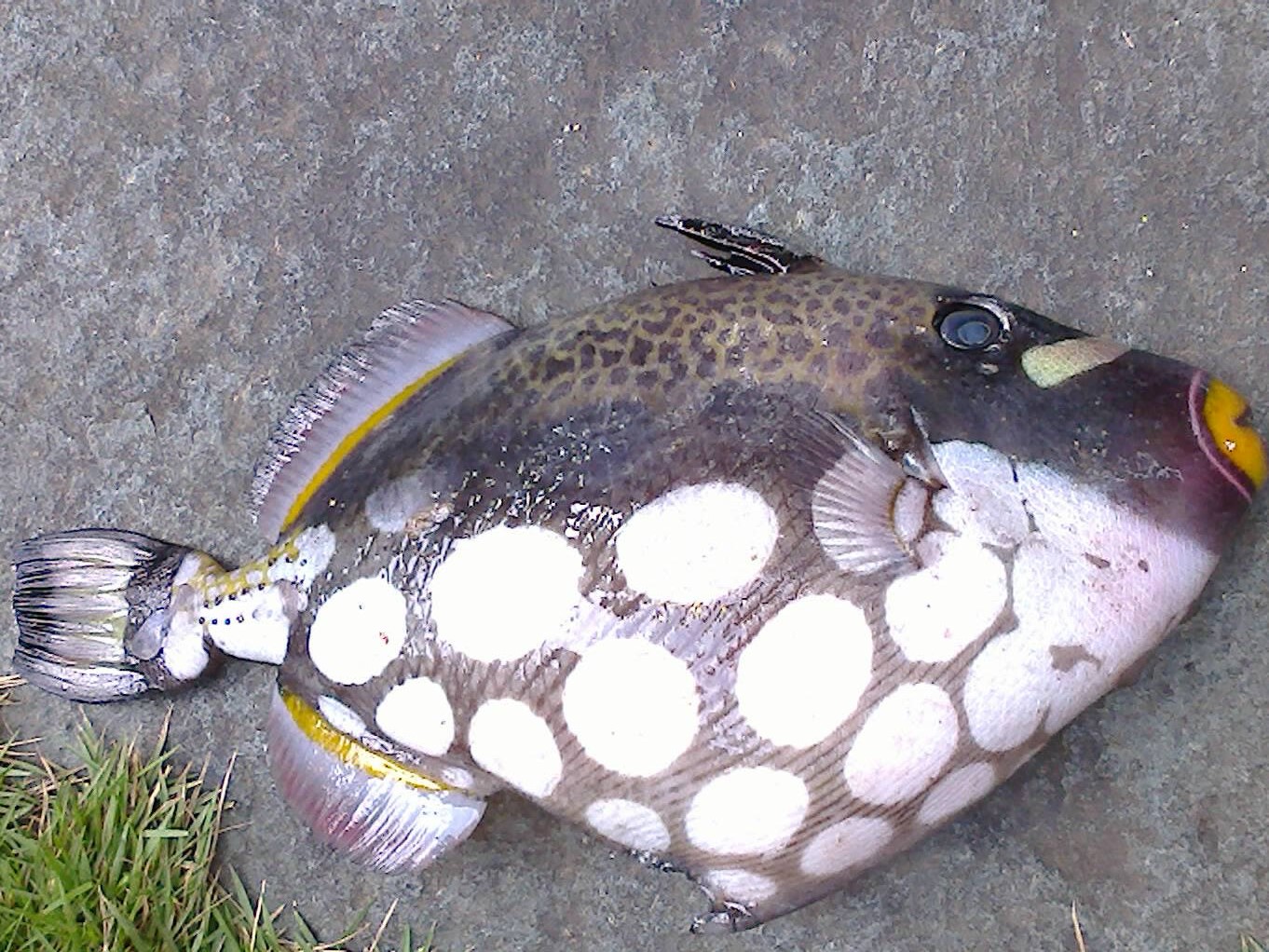
Clown Triggerfish ( Balistoides conspicillum )
Common Name: Triggerfish ( Scimitar, Lei, Scythe, White-lined)
Local Name: Papakol, Pakoy (Tagalog); Pugot, Tikos (Bisaya)
Max Size: 50 cm
Biodiversity: Marine, Reef-Associated
Depth: 3 – 75 meters
Fishing Season: All Year Long
Minimum Size Limit: None
Recommended Bait/Lures: Shrimp, crabs, other small crustaceans, sand worms
IUCN Red List Status Status: Least Concern
The Clown Triggerfish is another of the brightly colored trigger fish species that can be found around the islands. These fish are generally small and are caught by angler who are targeting other reef fish. This particular species is prized as an aquarium fish because of its beautiful coloration and patterns.
The Rabbit Hunt
The Rabbit Hunt
By Benaiah Fogle
A mention of the word Danggit in Filipino company is usually met with grins of delight and expressions of Lami-a uy! Sarap yan! and so on. This same word in the company of expats is met with groans and expressions of disgust. This is an article about Danggit, well the live one anyway, and its place in fishing here in the Philippines.
The word Danggit is a well-known name in Visayan for one of the many species of Rabbitfish inhabiting Philippine waters. Rabbitfish are also known in English as Spinefoots, and are known by many different names around the rest Philippines. Some of the names of the more well-known species include: Samaral, Kitong, and Danggit.

These fish are primarily a saltwater fish however they can be found in estuaries and even up stream in freshwater rivers. They also range in size from small almost minnow size fish to large kilo size fish. They all are generally round and compressed in body shape with small mouth bordered by lips that look as if they are ready to kiss. They range in color from mottled brown and green to silver, spotted, streaked and ever darker with more dramatic colors.
Rabbitfish all possess painful sharp spines all over their bodies. This is the reason they are called Spinefoots. A prick from one of these venomous spines leaves a throbbing pain for a long while. Fishermen need to exercise caution when handling this fish for that reason.
The mainly vegetarian diet of the Rabbitfish leads them close to the shore line around the country in search of seaweed and other plant matter. They often come in with the tide to shallow water to harvest the seaweed growing on the tidal flats. They often travel in schools which can be easily identified by the slivery flashes of the fish as they feed in schools on the algae on the seabed.
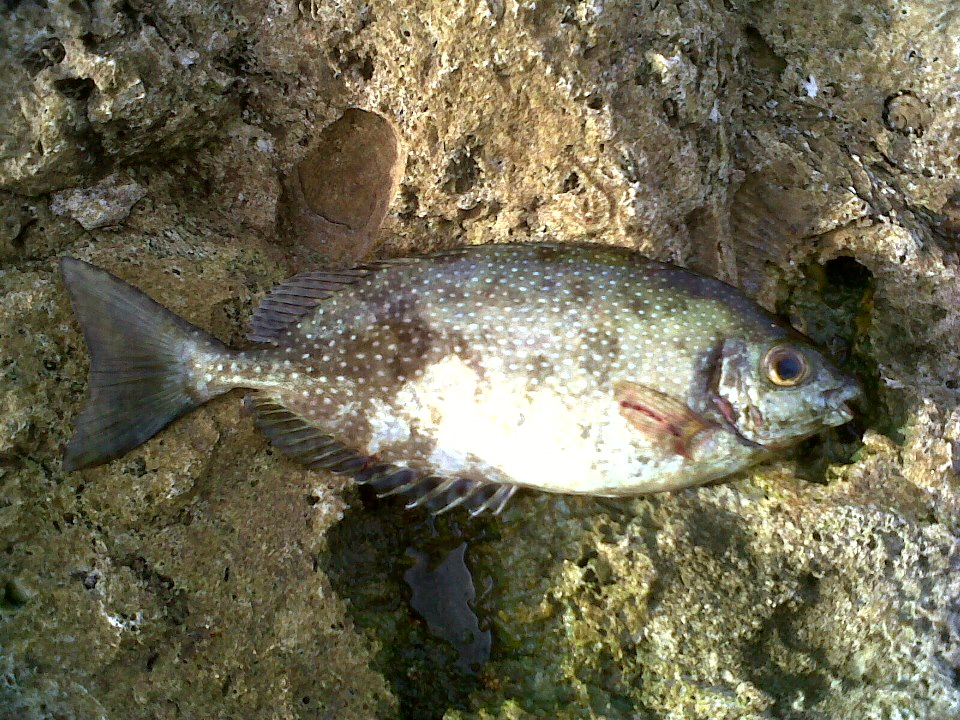
This is a Danggit
Rabbitfish are edible and make for fair table fare. Local favourite recipes for Rabbitfish include; Grilled Kitong (stuffed with onions and tomatoes), Steamed Kitong with Sweet and Sour Sauce and Fried Kitong. Small Rabbitfish are also a popular fish to salt and dry. Known simply as Danggit, these dried fish are then deep fried and eaten for breakfast lunch or dinner. My wife calls it her Philippine bacon. 😀 When the dried Danggit are fried there usually a pungent fishy smell that hangs in the air. This is usually what deters most foreigners from enjoying this Philippine delicacy.
Fishing Techniques

A Danggit float rig
Float Fishing – The small mouths on these fish along with their sharp algae scraping teeth present a challenge that frustrates and deters many fishermen. There however is a technique for catching Rabbitfish that works and with a little practice angler both you and old can enjoy the thrill of fishing for Rabbitfish.
Making a Danggit Rig is the first step. The rig includes a float with a swivel attached beneath onto which two lengths or at least 18” of light leader line are tied. Two small split shots are pressed onto the lines near the ends and then two long shank hooks of the smallest available size are tied at the ends. The long shanks help keep the fishes’ teeth from cutting the main line. There are two favourite baits for catching Rabbitfish. The first and most popular is the boiled cooking banana (Saba) and the other is glutinous rice. Rabbitfish seem to prefer these sort of baits though than can be caught on other things. Once small pieces of banana or sticky rice are cut and placed on the end of the hooks the rig is ready to be cast.
Local fishermen often chum the spot there plan on fish both before and during the time they fish. Rabbitfish feed throughout the day and so can be caught all day long. In areas where large predator fish are present small Rabbitfish when caught can be used as live bait.

A good haul of Danggit and Kitong caught on a float rig
Salvage – Another less palatable way that local fishermen catch these fish is by using specialized “salvage” rigs. This rig is designed to attract the fish to a bait which has two large hooks behind it. When the fisherman feels the Rabbitfish nibbling on the bait they jerk the line in attempt to snag the fish on the large hooks. This is obviously not a method used when fishermen are practicing catch and release because it often leaves large wounds in the fish. The local sport fishing community looks down upon such a method because of that harmful result.

A Kitong taken on a salvage rig
Pana – Because of their large round profiles, Rabbitfish make great targets for spearfishermen. They are also not a very shy fish and will often swim within spear distance of fishermen. Locals use homemade spearguns made of a piece of wood, a length of stainless steel bar and rubber straps. Spearmen either swim along shorelines, rocks, or reefs in search of fish or they set a bait in a good area and wait for the fish to congregate.

This is a Kitang which can also be caught when fishing for Kitong.
Now you know the basics of fishing for Rabbitfish.
Silver Pompano ( Trachinotus baillonii )

Expert Angler and Fishing Guide Joseph G. with his Dart caught on Grande Is. in Subic.
Common Name: Pompano, Dart, Swallowtail
Local Name: Pampano, Salay-salay, Talakitok (Tagalog); Uruk (Cebuano)
Max Size: 60 cm (1.5 kgs)
Biodiversity: Marine, Brackish, Reef Associated
Depth: Surface – ?? m
Fishing Season: All Year Long
Minimum Size Limit: None
Recommended Bait/Lures: small minnow lures, flies, and shrimp
IUCN Red List Status: Not Evaluated (NE)
This species of Pompano is a member of the Carangidae family of jacks and pompanos. It is found around the Philippines often close to shore near reefs, lagoons, and along sandy beaches. These fish travel in pairs or small groups and often feed near the surface on small fish.
Like other jacks and pompanos this species makes great table fare. The elongated shape of this species along with its small spots on the sides help identify the fish.
Joseph caught the fish above on a small lure while casting from Grande Island near Subic.
Indong Eel
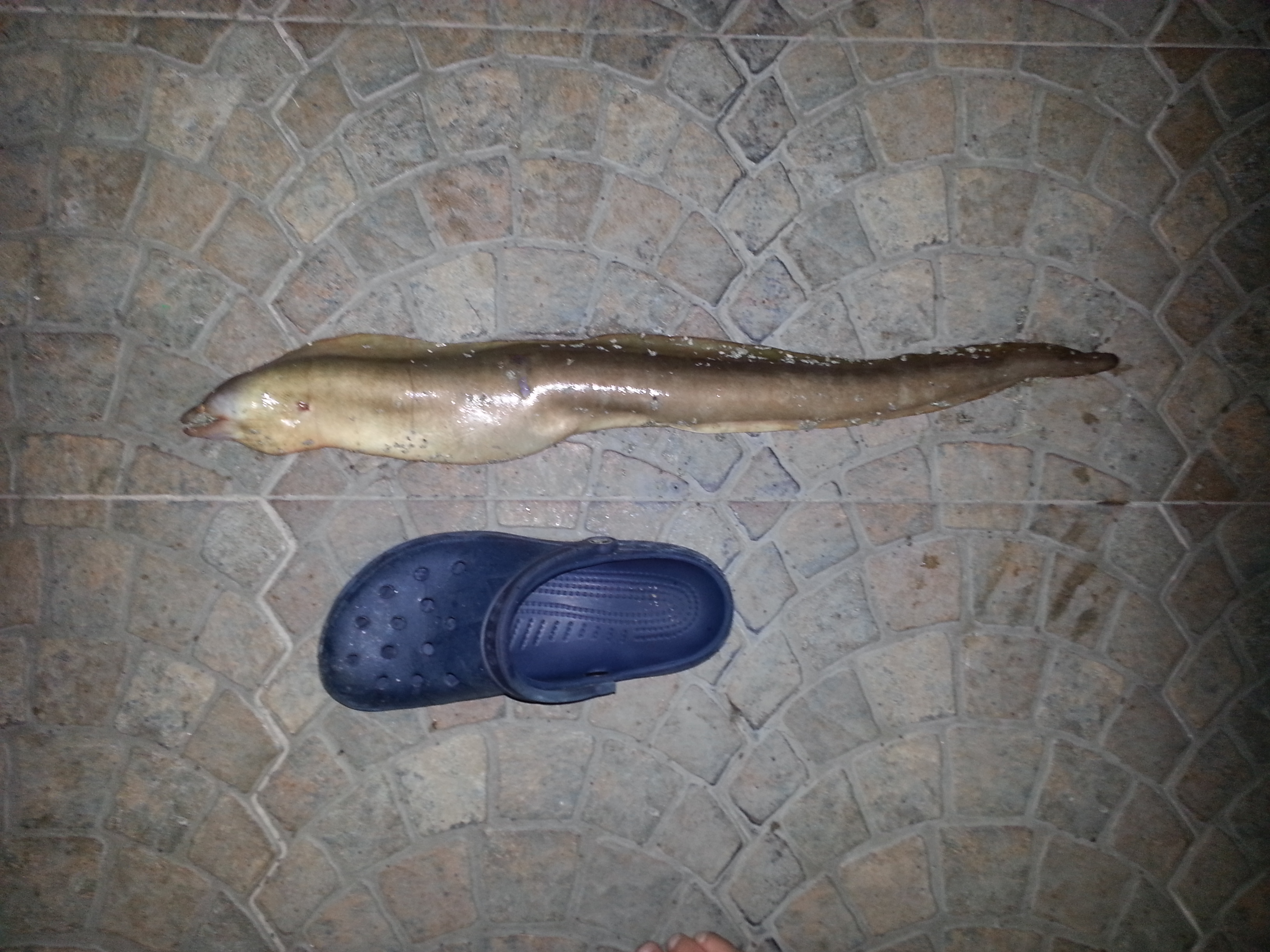
Most bait fishermen here in the Philippines have experienced catching a slimy, squirming eel of some kind. This particular eel is in called Indong in Cebuano and is shorter and stockier in length than some others. Small eels of this and other species are called Bacasi here in the Visayas.
Eels are most often caught at night on a variety of bait. Usually something smelly attracts them and they often gobble the bait down whole. Anglers fishing for other species of fish are often annoyed at catching eels because they twist their slimy bodies in a attempt to escape. This action is however often caused the line and leader to twist and wrap tightly around the eels body. It is not uncommon for the eel to strangle itself this way on the line. Anglers usually have to cut off their leaders when they catch an eel that tangles their line.
Eels are generally considered good eating. This particular species is desired because of its thick flesh which contains fewer bones than some other eel species. Some local Cebuano dishes for Indong include; Sugbaonon (Grilled), Inun-unan (vinegar/ginger based dish) and Larang (another sour soup dish).
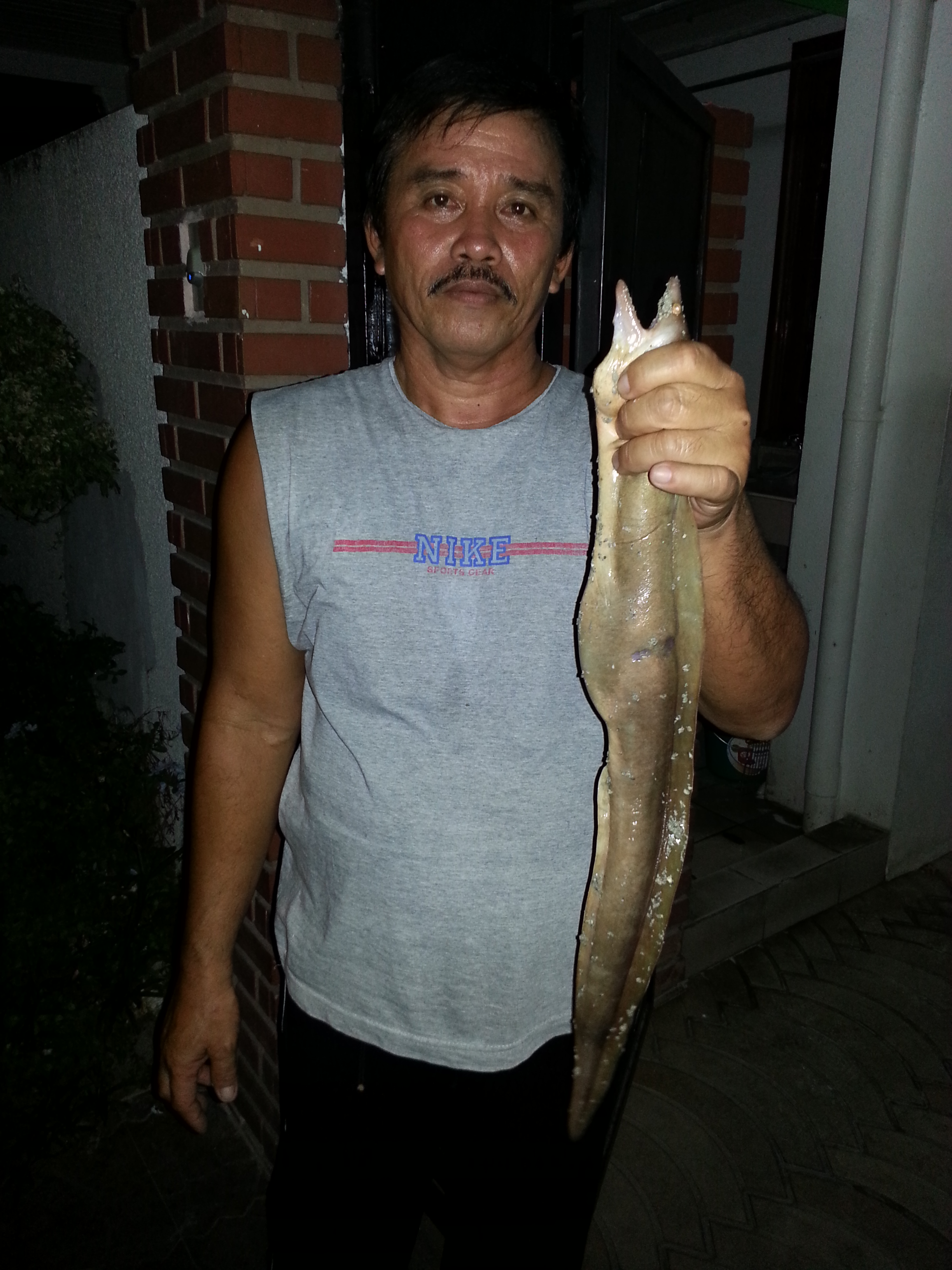
Vencio holding an Indong
Boomerang Triggerfish ( Sufflamen bursa )
Common Name: Triggerfish ( Scimitar, Lei, Scythe, White-lined)
Local Name: Papakol, Pakoy (Tagalog); Pugot, Tikos (Bisaya)
Max Size: 25 cm
Biodiversity: Marine, Reef-Associated
Depth: 3 – 90 meters
Fishing Season: All Year Long
Minimum Size Limit: None
Recommended Bait/Lures: Shrimp, crabs, other small crustaceans, sand worms
IUCN Red List Status Status: Least Concern
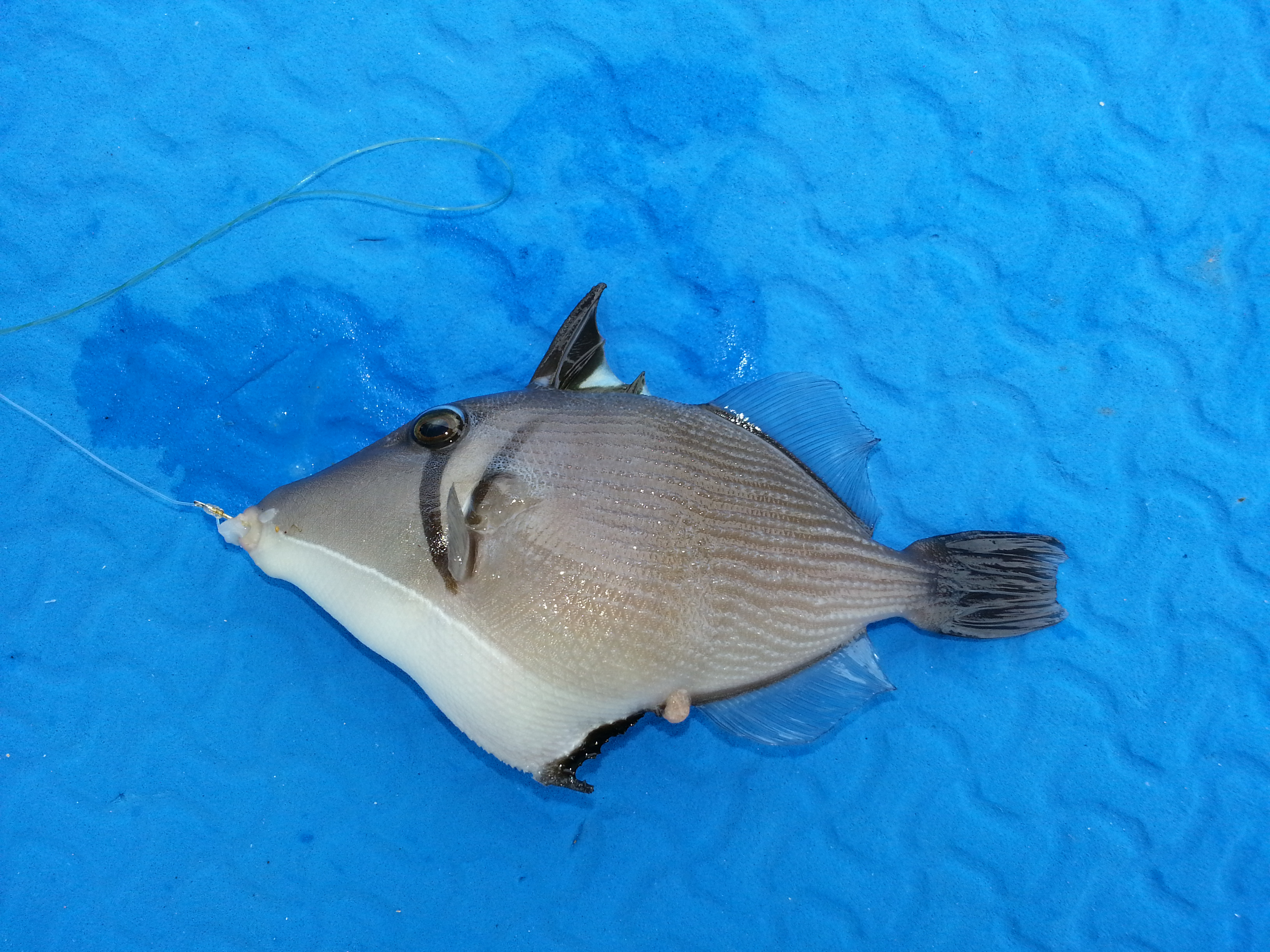
This is yet another of the many small species of triggerfish found around the Philippines. This species can be identified by the boomerang shaped markings over the eyes along with a fairly plain colored body. Notice the stunning blue eye shadow like color over this fish’s eye.
Like most triggerfish the boomerang is oddly shaped and has a thick leather-like skin. The make good eating once this skin is removed. This particular species has quite a depth range in which it can be caught from shallow water all the way to 90 meters. Angler’s are most likely to catch these when using small baits like shrimp or squid on small hooks. These are one of the many species of small fish that can be a bother fishermen who are using large bait for larger fish. The small triggerfish with strong jaws and sharp teeth can cut larger baits to pieces while evading the hooks.
The triggerfish in the picture above was caught on small pieces of shrimp off Mactan Island in Cebu in around 50 meters of water.


 Fishing The Philippines