Oilfish ( Ruvettus pretiosus )

Big Oilfish Caught by Josh in Siargao
Common Name: Oilfish
Local Name: ?? (Tagalog); Penahon (Cebuano)
Max Size: 300 cm (63.5 kgs)
Biodiversity: Marine, Benthopelagic, Oceanodromous
Depth: 100 – 800 meters
Fishing Season: None
Minimum Size Limit: None
Recommended Bait/Lures: Fish (cutbait or whole) , squid
IUCN Red List Status Status: Not Listed
This species is a deepwater species related to the Snoek (Snake Mackerel). These are relatively rare to see around the country due to the depth at which they live. These fish are called oilfish due to the high oil content of their flesh. They are edible and delicious however eating large quantities of this fish’s flesh causes a laxative effect which can be quite disturbing. It is recommended that if you eat this fish that you don’t eat very much.

Another Shot of Josh’s Oilfish
Orange-Striped Emperor ( Lethrinus obsoletus )

Common Name: Emperor, Bream
Local Name: Bitilya (Tagalog); Katambak Budlis (Cebuano)
Max Size: 60 cm
Biodiversity: Marine, Reef Associated, Non-Migratory
Depth: 1 – 30 meters
Fishing Season: None
Minimum Size Limit: 10 inches
Recommended Bait/Lures: Shrimp, crabs, other small crustaceans
IUCN Red List Status Status: Not Listed
Here is another one of the many emperor species found through out the waters here. This fish was caught on Mactan Island, Cebu.
Indo-Pacific Tarpon ( Megalops cyprinoides )

Indo Pacific Tarpon
Common Name: Tarpon
Local Name: Bulan-Bulan (Tagalog), Buan-Buan, Salongong, (Cebuano)
Max Size: 150 cm (18kgs)
Biodiversity: Marine; Freshwater; Brackish; Benthopelagic; Amphidromous;
Depth: 1 – ?? m
Fishing Season: All Year Long
Minimum Size Limit: 12 inches
Recommended Bait/Lures: Shrimp, small fish; spoons, jigs, crankbaits and soft plastics
IUCN Red List Status: Data Deficient (DD)
The Philippines is unfortunately not blessed like Florida, USA with giant Tarpon. Instead we have the smaller Pacific cousin; The Indo-Pacific Tarpon. Though this species is reported to reach up to 18kgs, which is a good sized fish, the common size found throughout Philippines waters is closer to 1-2kgs. These fish are Benthopelagic, meaning they spend the majority of their time just above the sea floor. They are also Amphidromous, meaning they migrate to freshwater from salt or from salt to fresh at some point in their lives. It is not uncommon to find these fish in freshwater rivers, ponds and even lakes. Adult tarpon are more commonly found at sea while the smaller ones are typically found close to shore. These are a popular fish to stock in freshwater sportfishing ponds because of their energetic fights and often aerobatic displays. Baby tarpon can often be seen in pet shops for sale for freshwater aquariums and are easy to spot due to their large flashy silver scales. Their local name Buan-Buan (literally – Moon-Moon) comes from their flashy white color which can even be seen reflecting of of light at night.
Tarpon are excellent game fish because they take a variety of lures and have great fighting abilities. They are however fair to poor as a food fish. Their flesh has a very muddy taste and so we recommend that you release these fish if you catch them.
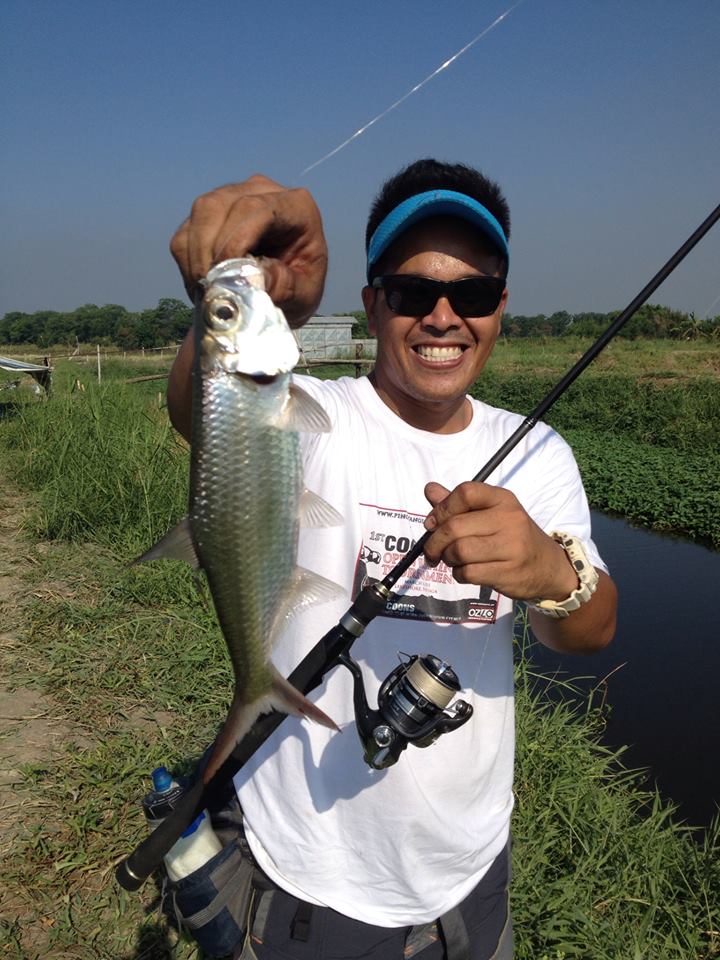
Joseph G. with his tarpon caught on a micro lure.

Jospeh G.’s impressive haul from Tarpon fishing

A Buwan-Buwan (Tarpon) caught night fishing in Cebu
<><
Spotted Snapper ( Lutjanus sp. )

Art’s Spotted Snapper
Common Name: Spotted Snapper
Local Name: Pargo, Maya Maya (Tagalog), Aluman, Awman, (Cebuano)
Max Size: 30 cm
Biodiversity: Marine, Brackish, Reef Associated,
Depth: 1 – 80 m
Fishing Season: All Year Long
Minimum Size Limit: 8 inches
Recommended Bait/Lures: Shrimp (either live or dead), small fish and crustaceans; small lures
IUCN Red List Status: Least Concern (LC) / Not Evaluated (NE)
This is a relatively small species of snapper that is abundant throughout the islands. It is often found in schools or pairs around reefs, rocky coast, mangroves, lagoon and even estuaries. We are not quite sure yet the exact species this is due to the fact that there are several species of small spotted snappers that these fish may be. Here are some of the possible species; guttatus, russellii, fulviflamma.
Despite their small size these fish are still valued as a food fish. To catch these fish fishermen often use multiple hook bottom fishing rigs with small hooks. Small live shrimp are the preferred bait though many small bait work.
Spotted Butterfish ( Scatophagus argus )
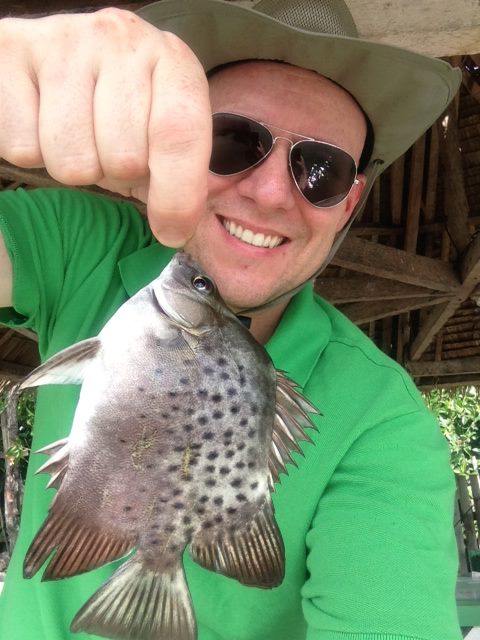
Dave’s Butterfish
Common Name: Spotted Scat
Local Name: (Tagalog), Kitang (Cebuano)
Max Size: 35 cm (1.2kg)
Biodiversity: Marine, Brackish, Reef Associated,
Depth: 0 – ? m
Fishing Season: All Year Long
Minimum Size Limit: 8 inches
Recommended Bait/Lures: Shrimp, Squid, fish & many other baits including algae.
IUCN Red List Status: Least Concern (LC)
These are a relatively small fish that are very similar to the Rabbit fish species. They resemble rabbit fish however they have a more unique body shape. They are said to have venemous spines that cause painful wounds so should be handled with care. Here in Cebu angler use very small hooks to catch these fish.
Honey Comb Grouper ( Epinephelus merra )

Honey Comb Grouper Caught at the Marcello Fernan Bridge
Common Name: Grouper
Local Name: Lapu Lapu (Tagalog), Lapu Lapu, Pogapo (Cebuano)
Max Size: 32 cm
Biodiversity: Marine, Reef Associated,
Depth: 0 – 50 m
Fishing Season: All Year Long
Minimum Size Limit: 8 inches
Recommended Bait/Lures: Shrimp, Squid, fish or cut bait; jigs, soft plastics, crankbaits
IUCN Red List Status: Least Concern (LC)
This is a small species of grouper found throughout the islands. It Is easily distinguished by its small size and honeycomb like spots covering its body. These fish, though small are prized as food fish.

Omet’s Honey Comb Grouper
Coral Hind ( Cephalopholis miniata )

Coral Hind caught in Cebu
Common Name: Grouper, Hind
Local Name: Lapu Lapu (Tagalog), Lapu-Lapu Lawihan, Pogapo, (Cebuano)
Max Size: 50cm
Biodiversity: Marine, Reef Associated, Non-Migratory
Depth: 2 – 150 m
Fishing Season: All Year Long
Minimum Size Limit: 10 inches
Recommended Bait/Lures: Shrimp, Squid, small fish or cut bait/ small jigs, soft plastics
IUCN Red List Status: Least Concern
This species is one of the many Grouper or Lapu-lapu species found around the islands. This species however is not one of the true grouper species. It is a member of the Hind family which closely resemble the grouper species. The Hinds tend to be a bit smaller in size than the groupers and are often plentiful in areas around reefs. This particular species (along with its red grouper relatives) is a highly sought after and highly valued species. They bring a high price in the market and are said to be better tasting than their darker relatives. The Hind species however are seen as a little inferior to grouper species as a food fish. Apparently these fish are most valuable when they are around 1kg.
The fish pictured above was caught here in Cebu off Olango Island during one of our fishing charters. It was caught at around 100m depth on peeled shrimp.
Striped Eel Catfish ( Plotosus lineatus )
Common Name: Catfish,
Local Name: Patuna, I-ito, (Tagalog) Ito (Cebuano)
Max Size: 32 cm
Biodiversity: Marine, Brackish, Reef-Associated
Depth: 1 – 60 m
Fishing Season: All Year Long
Minimum Size Limit: None
Recommended Bait: Shrimp, Squid and Fish
IUCN Red List Status: Not Evaluated (NE)
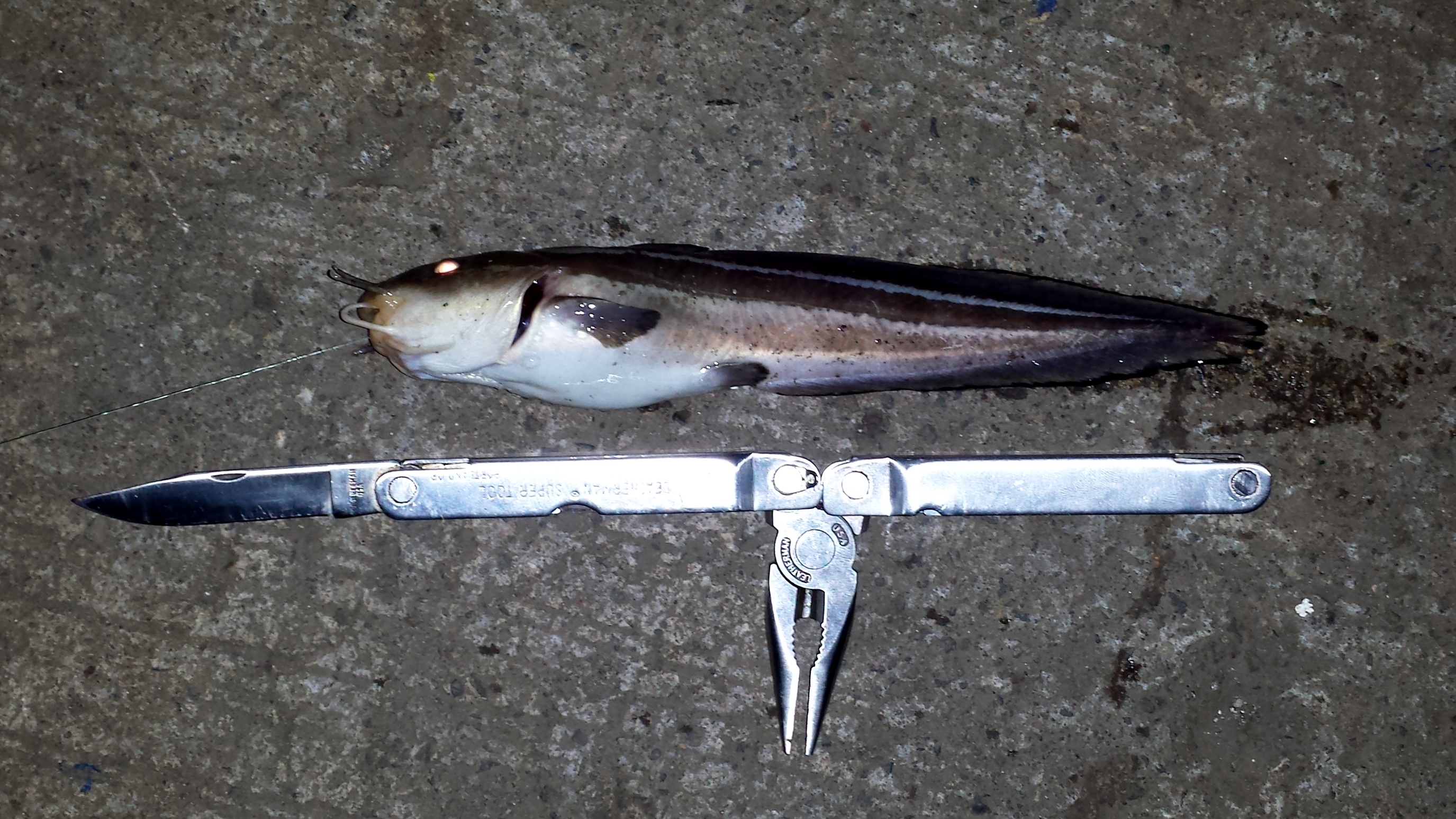
This is a unique species of catfish found in the ocean and occasionally in estuaries. Their eel-like tail fish are where they get their name. These catfish are usually quite small though bait anglers may catch some up to the max size. There is a related species that grows quite large and makes more of a prize than these little guys. It is not uncommon to see schools of these catfish swimming in dense balls around reefs where they feed.
Like most catfish in the Philippines the spines on the eel-catfish venomous. They leave a very painful sting that lasts for a while. Anglers should exercise care when handling these fish. These fish are edible though they are not a sought after fish.
<><
Redspot Goatfish ( Parupeneus heptacanthus )

Goatfish caught deep sea fishing in Cebu
Common Name: Goatfish, Cinnabar Goatfish,
Local Name: ?? (Tagalog); Timbungan (Cebuano)
Max Size: 36 cm
Biodiversity: Marine, Brackish, Reef-associated
Depth: 12 – 350 meters
Fishing Season: All Year Long
Minimum Size Limit: None
Recommended Bait/Lures: Shrimp, crabs, other small crustaceans
IUCN Red List Status Status: Not Listed
Goatfish are abundant here in Philippine waters and can be caught all over the country at both shallow and deep depths. These fish normally are found in pairs or small groups foraging over sandy, mucky, and rocky bottoms or sea grass. The one pictured above was taken on pealed shrimp bait fishing at around 100m. Goatfish are fairly good to eat though they do have a slightly fishy taste.
Bridled Triggerfish ( Sufflamen fraenatum )

Deep Sea Triggerfish caught in Cebu
Common Name: Triggerfish
Local Name: Papakol (Tagalog); Pakol (Bisaya)
Max Size: 38 cm (commonly 26 cm)
Biodiversity: Marine, Reef-Associated, Oceanodromous,
Depth: 8-186 meters
Fishing Season: All Year Long
Minimum Size Limit: None
Recommended Bait/Lures: Shrimp, crabs, other small crustaceans, sandworms
IUCN Red List Status Status: Least Concern
Here is a fish caught deep sea fishing in Cebu on shrimp. This was caught at around 100-150m of depth. These odd looking fish put up quite a fight and make up for their usually small size. These fish do not appear to be good to eat however they do taste quite good once you get through their leathery thick skin. Be careful of the mouth on these little guys which is small but armed with shell crushing teeth. Triggerfish are known in the scuba diving community to occasionally bite divers.


 Fishing The Philippines