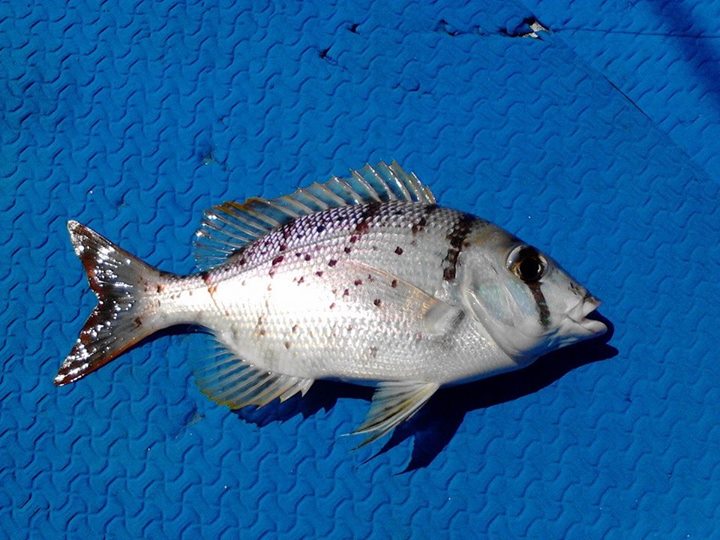
This is one of the many species of surgeonfish present in Philippine waters. These fish have small mouths and are quite difficult to catch. This fish was caught in Cebu on some boiled Saba (cooking banana) as bait. In Tagalog this fish is called Labahita.
Author Archives: benaiahfogle
Large-Eye Bream ( Gymnocranius elongatus )
Common Name: Bream, Seabream, Swallowtail Bream, Emperor, Large-Eye Emperor
Local Name: (Tagalog); Katambak Sa Laud (Cebuano)
Max Size: 35cm
Biodiversity: Marine, Demersal (bottom dwelling)
Depth: 50 – 100+ meters
Fishing Season: All Year Long
Minimum Size Limit: None
Recommended Bait/Lures: Shrimp, crabs, other small crustaceans
IUCN Red List Status Status: Not Listed
These are generally a deeper water species that can be found along sandy or rocky bottoms. They can be found in small schools or solitary. They feed on the bottom mainly on invertebrates. These fish have a delicious white flesh similar to other emperor species and snappers which makes them excellent table fare. The fish pictured above was caught in around 100m of water while deep sea fishing in Cebu.
Threespot Squirrelfish ( Sargocentron cornutum )
Common Name: Squirrelfish
Local Name: Sigang Batohan, Ganteng (Tagalog); Ganting, Baga, Baga-baga (Cebuano)
Max Size: 27cm
Biodiversity: Marine, Reef Associated, Brackish
Depth: 1 – 40 m
Fishing Season: All Year Long
Minimum Size Limit: None
Recommended Bait/Lures: Shrimp, crabs, other small crustaceans
These small fish are known for hiding most of the day under rocks and edges and coming out at night to feed on small crustaceans. They are easiest to catch at night and provide a good little fight. They make a fair food fish and are said to taste delicious here in Cebu when cooked as Inun-unan. These little guys are armed with venomous spines so care must be taken when removing them from your hooks. I came across the fish in the picture above while night fishing from a seawall here in Cebu. We were using small shrimp for bait.
Naga City Baywalk
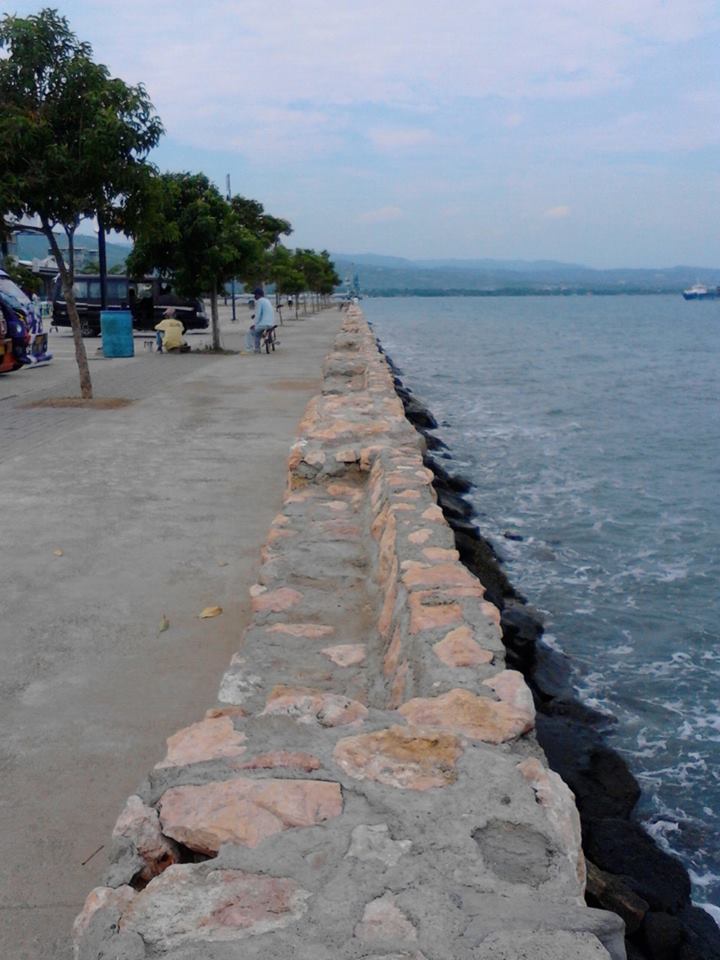
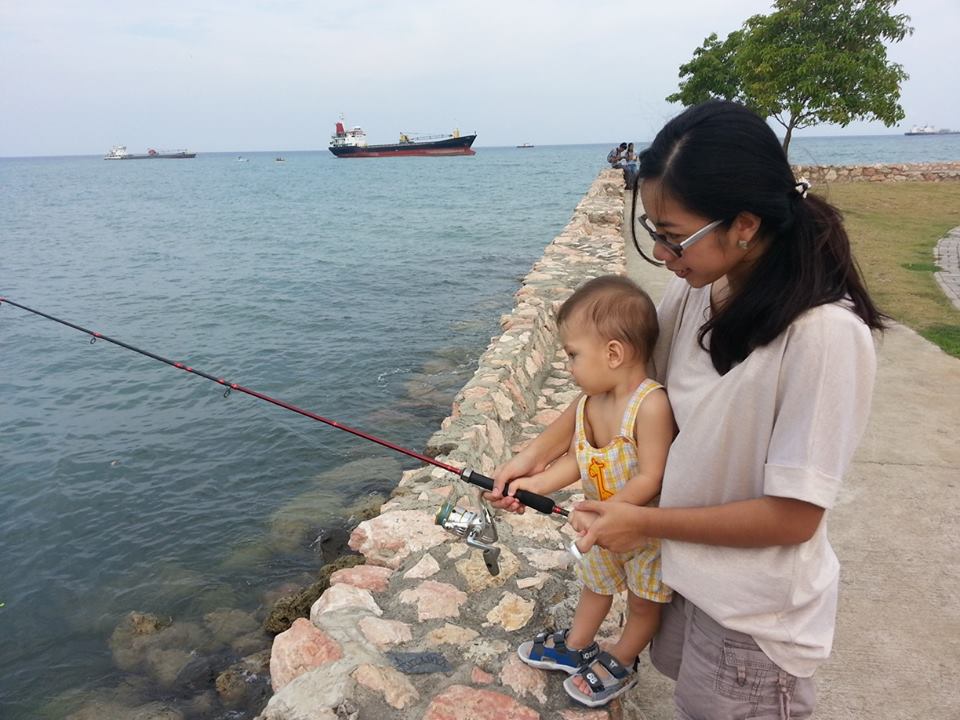
A thirty minute drive from downtown Cebu City, the Naga Baywalk is an excellent destination to fish. This well designed park is easily accessable by public transportation or private vehicle, is open to the public, has no entrance fee, and has much room to fish.
PROS:
Easily accesable
Free entrance
Food and drinks available
Lots of room to fish
Clean enviromment
Free Parking
Possible boat rentals for fishing from boats
Family Friendly
CONS:
Limited shade (there are some small trees, that is all)
Pedestrians (watch out for people walking or jogging on the path beside the sea wall)
FISH SPECIES:
Needlefish, Crescent Grunters, Jacks, and much more.
DESCRIPTION:
This is an excellent bay walk fishing spot. It is easy to get to and has a lot of room to fish. There are some places near the water to sit down and eat or have some cold drinks. The area is very clean and so is the water.
OVERALL SPOT RATING:
Based on my recent experience fishing at this spot I rate it as a ( 10/10 ). Though I was not able to land any fish I had multiple strikes on lures and thoroughly enjoyed the fishing experience. There were large schools of three inch baitfish being cornered near the rocks that would sporadically jump to escape feeding jacks. This is a great spot to do some serious fishing or to take the family for the day.
REMINDERS:
Bring sun protection if you plan on spending time here during the day. There is limited shade.
Traffic; if you happen to be visiting this spot from Cebu City be aware that the south road can become quite congested around rush hours.
Send us pictures! If you fish here and catch something send us your photos so we can add to this post.
A Note On Fish Names In The Philippines
It can be quite difficult and confusing trying to figure out the correct name of a fish you catch here. Here is a little info on fish names and on why it is such a task;
Linguistic Diversity – The Philippines is a country composed of more than 7,000 islands. There are 8 major languages spoken throughout the country (Cebuano, Bikol, Hiligaynon, Tagalog, Ilocano, Kapampangan, Waray, and Pangasinan) and there are many distinct dialects of those languages. Each language and many times dialects have their own and often distinct name for a particular fish. A Caranx ignobilis (Giant Trevally) is known as a Talakitok to a Tagalog speaking person and as a Mamsa to a Visayan. Depending on the region you are in when you catch a particular fish you will hear a different name. We list the English names and the scientific names here on Fishing the Philippines because the names of fish are more standardized.
A Lack of Awareness – Another reason why learning the correct name of a fish can be difficult here is due to the fact that much of the population here knows little of the diversity of fish species found here in the Philippines. Most people will know the names of the fish they directly come in contact with; Fish they buy to eat or fish raised in ponds or lakes nearby. That is why one of our goals here on Fishing the Philippines is to show the diversity of species found here and to teach an awareness and appreciation for these fish.
Incorrect Naming – Another problem when determining a fish’s name here is when people tell you what they think the fish is. Often this means that you will be getting the name of a fish that this fish reminds the person of. We have found that local fishermen and fish vendors are able to give the more accurate names of fish species found in various regions.
Introduced Species – This creates a unique problem as well because these fish do not have local names. The local communities create names for these fish which can also lead to confusion. The name Black Mass or Black Mask is a name used in parts of Laguna to refer to the Largemouth Bass (a species introduced to some lakes from America). It however is also used for some invasive species of carp such as bighead carp and silver carp.
Our task – Fishing the Philippines was started because we noticed a lack of information when it came to fish and fishing here in the Philippines. Our goal is to teach conservation and appreciation of the wealth that we have teaming in the water here in the Philippines.
How you can help – If you know the local names of the fish we post please let us know. We would like our site to be a comprehensive resource for sport fishing and you can help be a part of that. Also feel free to contribute to our fish species list. You can do that by sending us pictures and information about fish you have caught here. We are also glad to promote and share information regarding fishing events, conservation projects and other educational programs involving fish.
<><
Lizardfish ( Synodontidae family )
This is a family of fish common throughout the islands here that is often considered a pest. They are often caught when other larger and more sporting fish are being targeted. These fish rest on the seafloor on sandy bottoms, rock, coral or weeds and ambush smaller fish that wander too near them. Lizard fish are generally quite small however some species do grow larger. It is most common to catch these fish when fishing with minnow like lures, spoons or jigs, or live/dead bait. They strike at lures with ferocious speed and on the initial strike give the impression that they are a larger fish. Be careful handling these fish because their little teeth are quite sharp. Here in Cebu these fish are known as Tikitiki or Tuko. They have little value as a food fish but they do make an ok bait.
Bluespotted Hind ( Cephalopholis cyanostigma )
Common Name: Grouper, Hind
Local Name: Lapu Lapu (Tagalog), Lapu Lapu, Pogapo (Cebuano)
Max Size: 40cm
Biodiversity: Marine, Reef Associated
Depth: 1 – 50 m
Fishing Season: All Year Long
Minimum Size Limit: 10 inches
Recommended Bait/Lures: Shrimp, Squid, small fish or cut bait/ small jigs, soft plastics
These are one of the many species of Lapu Lapu (or grouper like species) that can be caught here in Philippine waters. This species is easy to confuse with its close relative the Bluespotted Grouper because of its dark color and blue spots. This species has smaller spots and is usually smaller. These relatively small fish are found around shallow reef and are usually caught on bait like squid, shrimp or even on jigs. This is an excellent food fish if you are lucky enough to catch one large enough to eat. They have a creamy white meat that tastes great steamed. Some popular dishes are Sweat and Sour, and Black Bean Sauce.
If you happen to catch small fish of this species please release them and give them a chance to grow to a larger size. We recommend that you don’t keep them if they are smaller than 10inches.
The fish in the picture above was caught on shrimp while bottom fishing in around 40m of water off of Mactan Island, Cebu.
Dogtooth Tuna ( Gymnosarda unicolor )
Common Name: Dogtooth Tuna, White Tuna
Local Name: Tambakol (Tagalog), Lanhu-an (Cebuano)
Max Size: 248 cm ( 131 kgs )
Biodiversity: Marine, Reef Associated, Oceanodromous
Depth: 10 – 200 m
Fishing Season: All Year Long
Minimum Size Limit: None
This is one of the big game species that can be caught here in the Philippines which is normally targeted by angler who are deep water jigging. Those this species is normally caught at deeper depths, it can also be caught while trolling lures near the surface. Dogtooth are reef associated fish normally found offshore around reefs. They feed mainly on small schooling fish and squid though they are opportunistic feeders and can be caught on a variety of bait.
Dogtooth are known by many different names throughout the country of which Tambakol seems to be the most common. Surprisingly they are not members of the Tuna family. They are excellent food fish and prove a great challenge when hooked.
The one pictured above was caught by anglers fishing out of the Masinloc Zambales Fishing Lodge.